The online version of this article (https://doi.org/10.18148/srm/2026.v20i2.8624) contains supplementary material.
A core tension in survey methodology lies between scalability and adaptability. Standardized, self-administered surveys solve long-standing issues of response incomparability by minimizing interviewer effects and enforcing consistent question wording (Feldman et al., 1951; Fellegi, 1964). However, their rigidity—especially in regards to open-ended questions—limits opportunities for clarification, elaboration, and respondent engagement (Fowler & Mangione, 1990; Schober & Conrad, 1997; Tourangeau et al., 2000). In contrast, conversational interviewing addresses many of these challenges by enabling dynamic clarification, probing, and even real-time validation of researcher interpretations (Schober & Conrad, 1997; West et al., 2018; Hubbard et al., 2020). However, conversational interviewing’s dependence on trained interviewers limits scalability and introduces new sources of bias. Moreover, integrating conversational or interactive elements into self-administered web surveys has historically been challenging.
Generative artificial intelligence (AI) is an emerging technology that offers a new opportunity to bridge these divides in web survey methodology. Large language models (LLMs), in particular, with their ability to process and generate human-like text (Bail, 2024), can be integrated into web surveys to enable scalable, self-administered conversational interviewing. Chatbots powered by large language models share the turn-based, dialogic structure of earlier rule-based systems such as ELIZA (Weizenbaum, 1966), but exhibit far more sophisticated reasoning and language capabilities owed to the vast training data used to calibrate the millions, sometimes billions of parameters in their underlying deep neural network models. While similar systems have been referred to by a range of terms in methodological literature—including AI conversational interviewers, AI-powered chatbots, conversational AI agents, AI interviewers, and adaptive interviewers—we adopt the term AI chatbots in this study for clarity and consistency with prior literature. We refer to the broader practice of using these systems to assist (but not fully replace) human interviewers or survey administrators in live data collection as AI-assisted conversational interviewing.
A growing body of methodological and applied research demonstrates how AI chatbots can both enhance the respondent experience and, in certain circumstances, improve survey data quality (Xiao et al., 2020; Wuttke et al., 2024; Velez & Liu, 2024). Still, several areas for theoretical development and empirical evaluation remain underdeveloped in this nascent literature, which motivates the present study. First, a clear typology of the capabilities of AI chatbots and how they align with established features of conversational interviewing remains underdeveloped. For instance, chatbots are capable of multiple types of probing, including to elicit depth (e.g., “Can you say more about that?”) and to verify the meaning of responses (e.g., “Just to confirm, did you mean …?”). Drawing from the literature on human-led conversational interviewing, we develop and apply a typology of probes to better specify the role AI can play as interview assistant. Second, while much of the integration of chatbots into surveys has centered on probing, LLMs possess a broader range of capabilities. These include live-coding responses (e.g., identifying subjective well-being from open-text entries), as human interviewers must often do for complex, branching surveys in face-to-face data collection. However, there has been little systematic evaluation of how each of these capabilities contributes to data quality. Finally, researchers still lack an understanding of whether AI chatbots perform differently across types of survey content, such as factual versus attitudinal questions.
To answer these questions, we present results from a survey experiment conducted on a conversational AI survey platform. Our design varies both the type of question (factual vs. opinion-based) and the specific chatbot intervention (e.g., with or without probing, and with different types of probes). We evaluate a set of AI-assisted conversational interviewing techniques and their effects on data quality (i.e., the quality of open-ended responses as well as the codes derived from them) and the respondent experience.
In the next section, we situate our study within the literatures on open-ended questions (the question format that our study seeks to improve), web probing and conversational interviewing (which offers tools to enhance open-ended responses, but suffer from limitations), and large language models (which offer a scalable solution to previous limitations). This background then provides the theoretical rationale for our main research questions.
Open-ended survey questions enable respondents to answer in their own words rather than using pre-defined response categories (Schuman & Presser, 1979; Tourangeau et al., 2000). The open-ended format eliminates satisficing behaviors induced by closed-ended questions, where the selection, order, and presentation of response categories can influence the respondent’s choice, potentially diverting them away from the ‘correct’ answer (Krosnick & Alwin, 1987). Moreover, open-ended questions can be used to elicit both subjective opinions and factual information: respondents can elaborate on their opinions (e.g., social attitudes) more thoughtfully as well as specify information (e.g., occupation) that may otherwise be burdensome to identify in a long list of choices (Krosnick, 2017).
Open-ended questions have their challenges too. They are more cognitively demanding, requiring more time to formulate and input a response, particularly on mobile devices (Antoun et al., 2017; Couper et al., 2017). Moreover, compared to short close-ended questions, open-ended questions may be more, rather than less burdensome exacerbating respondent satisficing or nonresponse (Krosnick, 1999). Some drawbacks of the open-ended question are specific to self-administered surveys. Without an interviewer to clarify question wording, respondents may provide incoherent or irrelevant answers or avoid answering altogether (Conrad & Schober, 2000; Conrad et al., 2005). Similarly, interviewers cannot clarify responses to ensure accurate interpretation. This creates a quality ‘doom loop’ that could be avoid through interactive clarification between researchers and respondents.
Many of the aforementioned issues with open-ended questions arise out of their usage in standardized interviewing (SI). While standardized interviewing practices solves the problem of response incomparability due to interviewer effects (Feldman et al., 1951) and question variation (Fellegi, 1964), the rigidity of scripted surveys introduces other threats to construct validity (Fowler & Mangione, 1990). By now, a substantial body of research demonstrates how conversational interviewing (CI), also known as flexible interviewing (FI), can effectively mitigate such threats.
For instance, Schober & Conrad (1997) demonstrate that allowing both respondents and interviewers to initiate follow-up questions or ‘probes’ reduces comprehension errors and fosters a more consistent understanding of survey questions. Similarly, Suchman & Jordan (1990) and Conrad & Schober (2000) show that conversational techniques enable respondents to elaborate on their answers, improving the accuracy of coding responses into pre-specified categories while also eliciting more detailed and relevant data. Further, West et al. (2018) find that conversational interviewing enhances response quality for income-related questions and other topics without compromising construct validity or introducing significant interviewer effects. More recently, Hubbard et al. (2020) demonstrate that conversational interviewing techniques can be effectively deployed by a variety of professional interviewers. While interviewers with a stronger sensitivity to respondents’ comprehension are more efficient, the technique significantly improves response quality for both opinion and informational questions.
In addition to enabling clarification and elaboration, conversational interviewing creates an opportunity for real-time respondent validation (also called ‘member checking’ in qualitative research practices), where researchers confirm their interpretations or categorizations with respondents (Schober & Conrad, 1997; Birt et al., 2016). This process amplifies the participant’s voice by directly involving them in constructing the researcher’s understanding of responses (Mason, 1997). Unlike traditional methods that defer such validation until after the study concludes, conversational interviewing allows for ‘live coding’ by the researcher and real-verification and correction from the respondent. For instance, the interviewer may first summarize a respondent’s answers after the conclusion of a module or, if a live codebook is being used for a particular question, explicitly state their intended coding, and then request confirmation or feedback from the respondent.
Conversational interviewing is, of course, not without its own drawbacks. The reliance on trained human interviewers may impose substantial costs on researchers (Groves, 2005) and induce effects such as socially desirable responding. Studies suggest that field interviewers, when asked to ‘live code’ information from respondents, are prone to errors like mistyping and mishearing (Olson & Smyth, 2015; West & Blom, 2017). Moreover, integrating conversational or interactive elements into self-administered web surveys has historically been challenging. Conrad et al. (2005) proposed early interactive adaptations into web surveys using hyperlinks and inaction triggers, but these lacked the adaptability and personalization of live interviewing. Similarly, interactive feedback in web forms can improve response accuracy, as demonstrated in Conrad et al. (2005), but it requires a clearly defined concept of accuracy as well as static pre-programmed rules to enforce accuracy (e.g., hours entered into daily timesheet must sum to 24). Research incorporating avatars (or virtual agents) and audio recordings into web surveys also fell short, often disrupting the interview flow, increasing completion time, or failing to enhance the respondent experience (Conrad et al., 2007; Tourangeau et al., 2000).
Traditionally, interactive probing techniques in conversational interviewing have not been possible to fully replicate in the web context, given the requirement to pre-program static questions before fielding online surveys. The closest approximation has been the practice of web probing, or inserting a small number of pre-scripted, open-ended follow-ups in an otherwise standardized questionnaire. Originally developed to validate cross-national survey items and enable a form of cognitive pre-testing at scale, web probes typically ask respondents to explain an earlier closed-ended answer. Behr et al. (2017) offer a useful typology of web probes: category-selection probes which invite respondents to justify why they chose a particular response category, comprehension probes which ask respondents to define a term or describe what they believe the question is “really about,” and specific probes which focus on a salient detail of the initial answer.
Web probing faces two main constraints. First, because probes are typically attached to closed-ended items, they offer no direct mechanism for improving the content or codability of open-ended answers—the format typically most in need of clarification. Second, their scripted nature precludes real-time adaptation. As Behr et al. (2017) note, web probes lack “the interactivity that would allow spontaneously acting on issues coming up in the probe response or rephrasing a probe that turns out to be problematic.”
Still, the empirical literature on web probing yields useful evidence on the effects of follow-up questions in otherwise self-administered surveys. Embedding open-ended probes can slightly increase break-offs, back-tracking, and answer changes to earlier items, though these effects tend to be rare and manageable (Hadler, 2025). The burden appears modest: neither the number of probes nor topic interest markedly harms response quality, completion rates, or respondent satisfaction (Holland & Christian, 2009; Neuert & Lenzner, 2021).
Conversational interviewing administered by humans, which is tailored to each respondent, is difficult to scale in large-scale web surveys, while previously studied interactive features in web surveys are scalable but lack personalization. Recent methodological and applied social science research suggests that large language models (LLMs) can bridge this gap by providing scalable, personalized, and interactive survey experiences (Bail, 2024).
LLMs, such as GPT‑4, are advanced generative AI systems trained on vast amounts of text data. Large parameterization and deep transformer architectures enable LLMs to process and produce coherent, informative, and contextually aware natural language. In turn, LLMs can simulate human-like conversation and reasoning (Vaswani et al., 2023). A novel feature of language models is that they may be directed through the use of instructional prompts (known as prompt engineering) rather than programmed code. Researchers can further adapt LLMs for their particular task by simply providing a small curated dataset of inputs and exemplar outputs, a practice known as few-shot learning (Brown et al., 2020). This allows them to adapt to new tasks with minimal supervision, often far more efficiently than earlier supervised machine learning models that required large training datasets. In the context of surveys, this parallels how a human interviewer may be trained using instructions, scripts, and example responses (Billiet & Loosveldt, 1988). A key advantage is that LLMs can perform analytical tasks with minimal input from researchers: for instance, tasks like live occupation coding no longer require exhaustive codebooks or large annotated training sets, as was the case with prior supervised approaches (Schierholz et al., 2018; Schierholz & Schonlau, 2021), but can often be accomplished with brief definitions or instructions alone. As such, LLMs offer a scalable and flexible means to support, or even stand in for, human interviewers in conducting dynamic, text-based interviews.
Despite this ability to produce conversational text and demonstrate reasoning abilities, LLMs are prone to a phenomenon known as hallucination—that is, misinterpreting instructions or confidently producing incorrect or misleading outputs (Ji et al., 2023). This is a fundamental feature of such generative models that operate with next-token prediction or advanced ‘autocompletion’ algorithms. AI researchers have cautioned model users not to conflate these capabilities with truth-seeking motivations or genuine comprehension of human inputs. Moreover, it remains essential that practitioners evaluate and monitor such models for systematic hallucinations in their particular applications, rather than assume that a model’s strong performance on industry benchmarks will guarantee low hallucination rates in downstream use cases (Bang et al., 2023).
Methodological evaluations of LLMs for open-ended response processing (Mellon et al., 2024) as well as synthetic respondent modelling (Argyle et al., 2023; Bisbee et al., 2024) are expanding, but as von der Heyde et al. (2025) systematically document, there is relatively limited peer-reviewed literature on AI-assisted interviewing itself. That said, some promising methodological results and applications of AI-assisted conversational interviewing have already emerged. Xiao et al. (2020) show that the usage of an AI chatbot can enhance participant engagement. An analysis of over 5200 free-text responses from a field experiment where half of respondents completed a standard online survey in Qualtrics, while the other half completed a conversational survey administered by an AI-powered chatbot, showed that chatbot-administered surveys elicited significantly more informative, relevant, specific, and clear responses. In another study, Wuttke et al. (2024) compared the quality of responses elicited by a human interviewer versus an AI chatbot in a small-sample, student-based lab study. Respondents rated the chatbot interviews as comparable to human-led ones in overall quality and completeness, with the chatbot condition offering greater efficiency and standardization. However, the authors caution that their findings may not generalize beyond the lab setting, and the presence of student monitors overseeing the interaction limited the ability to assess whether chatbots lower social desirability bias in sensitive topics.
Taken together, current research suggests that AI chatbots can be integrated into web surveys to mirror many of the benefits of human-led conversational interviewing. Yet the field remains in its infancy, and a generalized understanding of when, how, and for whom AI chatbots can meaningfully enhance survey data quality are far from settled. This motivates our current study, which builds on this foundational work to systematically test AI chatbot capabilities in the context of a self-administered web survey.
Building on the previously mentioned literatures, we introduce and operationalize two broad approaches for leveraging AI technologies such as large language models in web survey data collection: live coding and probing.
AI-assisted live coding refers to an AI chatbot’s ability to detect concepts within open-ended answers in real time, as a field interviewer might (West & Blom, 2017) without the risks of human error (Olson & Smyth, 2015). This functionality draws on machine learning techniques such as text classification, sentiment analysis, and topic modelling (Puri & Catanzaro, 2019). Unlike post-hoc automated coding methods using supervised learning or language models (He & Schonlau, 2022; Gweon & Schonlau, 2024), live coding occurs during data collection, enabling immediate usage for survey branching respondent validation. To facilitate live coding, a standard codebook can be provided to the chatbot with examples (few-shot learning), with only definitions (zero-shot learning), or omitted entirely to prompt on-the-fly category discovery (unsupervised learning).
AI-assisted probing refers to an AI chatbot’s ability to generate follow-up questions based on a respondent’s answer to a seed question, mirroring practices in human interviewing (Billiet & Loosveldt, 1988; Groves et al., 2009). In typical self-administered surveys, all probes must be hard-coded using static logic. In contrast, AI chatbots can be trained to decide when and how to probe based on prior responses or survey paradata.
In this study, we further operationalize three types1 of AI-assisted probes inspired by earlier typologies of conversational interviewing (Suchman & Jordan, 1990) and web probing (Behr et al., 2017):
Confirmation probes allow the respondent to confirm whether the chatbot’s live coding aligns with the respondent’s intended meaning, A confirmation probe can be asked as a yes/no question where the chatbot categorizes an answer and asks for confirmation. If multiple categories are detected or if there is uncertainty, the chatbot could ask the respondent to select from a list of possible categories.
Elaboration probes invite the respondent to provide more detail about an open-ended answer they have given, elaborate on their reasoning, or offer more specific information.
Relevance probes are used to improve the relevance or interpretability of the original response provided.
We acknowledge that it is possible to administer hybrid probes that overlap between multiple categories. In some cases, one type of probe may accomplish the goal of another, as it might be necessary to request elaboration to determine relevance, or vice versa. For example, in order to clarify whether ‘space’ refers to ‘green space’ (relevant) or ‘outer space’ (irrelevant), a probe may request both elaboration and relevance.
Our study evaluates the effectiveness of AI-assisted conversational interviewing, as operationalized through the methods of live coding and probing. We investigate three core questions:
Although LLMs have been evaluated for post-hoc classification (Mellon et al., 2024; Heyde et al., 2025) and supervised machine learning algorithms for live classification (e.g., Schierholz et al., 2018; Schierholz & Schonlau, 2021), few studies have evaluated LLMs for live classification. Our study aims to establish a performance floor—that is, how well a chatbot with minimal prompting and no comprehensive codebook can produce accurate classifications.
While existing studies do not replicate our exact setup, they offer useful benchmarks to help calibrate expectations. Schierholz et al. (2018) reported agreement rates between supervised learning algorithms and human coders on occupation codes that ranged from 73% to 93%, depending on question format and dataset. By comparison, recent evaluations of LLMs have yielded 91–94% classification accuracies on open-ended survey responses, including German-language responses about survey motivation and English-language “most important issue” questions, with slightly lower but still promising results in zero- and few-shot prompting settings. In the context of real-time classification, Schierholz and Schonlau (2021) found that 72% of respondents successfully selected an occupation provided by a supervised machine learning algorithm’s during the interview. In our case, we might then expect high, but variable accuracy in our real-time context which spans multiple question types.
Prior evidence from conversational interviewing (West et al., 2018; Suchman & Jordan, 1990), web probing (Behr et al., 2017) and early AI chatbot evaluations (Wuttke et al., 2024) suggests that dynamic, tailored probes will increase the informational content in open-text responses. Accordingly, we hypothesize a positive effect of probing on open-ended response quality.
While web probing studies suggest limited effects on satisfaction, breakoff, or burden (Neuert & Lenzner, 2021; Hadler, 2025), AI chatbots may introduce additional delay, contribute to response latency, or increase cognitive load relative to a static web survey experience. We treat this as an open empirical question.
The next section details our experimental design to formally evaluate the AI-assisted interviewing approach along these dimensions.
In order to evaluate the impacts of AI-based coding and probing on data quality, we designed and administered a survey on a chat-based interface with experiments embedded within each of four distinct question groups. Table 1 summarizes our design, including the flow of the four question modules and their variations in format across experimental conditions. Reference questions were drawn from major surveys as were codebooks to develop the coding frame for live coding and to inform the close-ended response categories.
Table 1 Overview of Experimental Design
Seed Question Format Across Conditions | |||||
Survey Module | Control: No Probes | Treatment 1: Conf. Probes | Treatment 2: Elab./Rel. Probes | Coding Dimensions | Reference |
(Exp 1) Most Important Issue | Open-Ended | Open-Ended | Open-Ended | Political issues | Gallup Tracking Poll |
(Exp 2) Economic Conditions | (i) Close-Ended (Sentiment) (ii) Open-Ended (Reason) | (i) Open-Ended (Sentiment) (ii) Open-Ended (Reason) | Open-Ended | (i) Sentiment (Pos/Neg) (ii) Reason | Pew American Trends Panel |
(Exp 3) Preferred News Source | Close-Ended | Open-Ended | Open-Ended | News Outlets | NORC AmeriSpeak Profile Survey |
Demographics | Close-Ended (Age, Gender, Education, Employment) | N/A | N/A | ||
(Exp 4) Main Occupation (Among Employed) | Close-Ended | Open-Ended | Open-Ended | Occupation Codes | BLS Standard Occupational Classification |
Respondent Experience | Close-Ended (Quality, Ease, Satisfaction, Frustration) | N/A | N/A | ||
Each of the within-survey experiments included 1–2 open-ended questions on commonly surveyed topics: (1) most important national issue, (2) economic evaluation, (3) news sources, and (4) occupation. A complete questionnaire can be found in Appendix Table A1.
This design, though complex, allowed us to better generalize conversational AI’s effects on data quality across different contexts. First, the formats of the control condition question reflect different real-world survey practices: short ordinal lists (economic sentiment), long nominal lists (23 standardized occupational codes), choices with varying granularity (news sources which may include apps or outlets), and open-ended questions requiring ex-post coding (national issue). Second, the four experiments spanned factual responses (news source, occupation) and subjective opinions (national issues, economic evaluation). Third, conceptual categories varied, covering topics (national issues), sentiment (economic sentiment), proper nouns (news source), and classifications (occupation), highlighting the diverse challenges for chatbot coding.
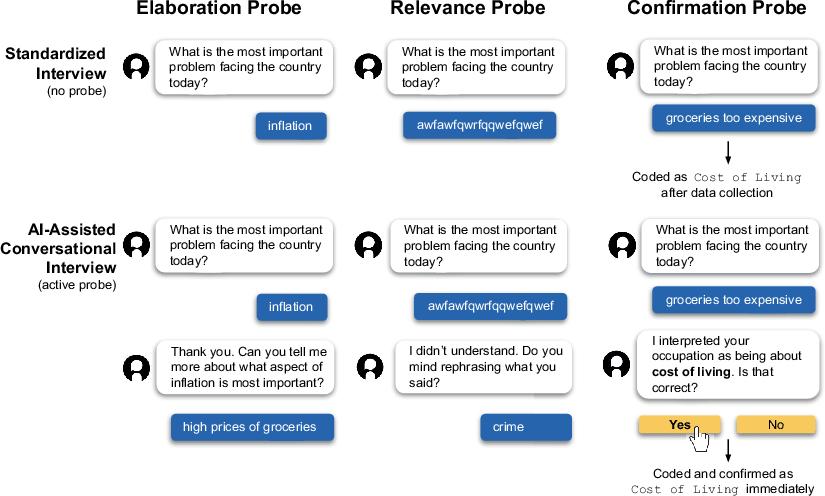
The baseline control question in each experiment was standardized to all respondents with no probing or live coding, while the two treatment versions each administered a specific type of probe based on the initial (seed) question and response. In Treatment 1, the chatbot could only deploy confirmation probes while in Treatment 2, the chatbot was configured to deploy only elaboration or relevance probes.2 Fig. 1 illustrates the exact user interface seen by respondents in different standardized and conversational conditions along with real probes of each type administered in the conversational interviewing conditions.3
In the second treatment condition, confirmation probes were configured to activate upon the coding of a category for the particular concept of interest (e.g., issue) explicitly sourced from a reference question and/or codebook (e.g., major issue categories identified in the national Gallup tracking poll).4 Noting in earlier literature that too many probes may increase overall nonresponse (Behr et al., 2012), guardrails were placed in the chat interface such that the chatbot could administer at most one probe per each seed question in any treatment condition.5
Finally, to explore heterogeneity in response quality effects, we collected demographic information and asked about the survey experience through a series of Likert-scale questions at the end of the survey. Details and results for heterogeneous treatment effects are given in Appendix Section A4.
We fielded our experiment on the conversational AI platform Inca, with an interface structurally identical to that depicted in Fig. 1. The underlying LLM in our experiment is SmartProbe (Seltzer et al., 2023), a model fine-tuned from the InstructGPT family (Ouyang et al., 2022) which is a collection of models themselves fine-tuned from the GPT‑3 foundational model (Brown et al., 2020). Further details on the structure of the SmartProbe model, including known information about its model settings, fine-tuning procedures, and evaluation metrics can be found in Appendix Section A1.
Importantly, though we provided the name of each coding category in our question-level prompts to the chatbot, we did not further provide examples of responses belonging to each category—a form of zero-shot learning (Kojima et al., 2022)—for the purposes of a conservative ‘off-the-shelf’ measure of performance.
To monitor and mitigate any risks of respondents encountering hallucinations, or irrelevant content generated by the LLM due to misinterpretations of probing instructions or input responses, we tested our chatbot extensively prior to fielding with sample inputs. We did not encounter any instances of hallucination in the generated probes. Similarly, when reviewing probes generated during the actual study, we only found 2 instances of off-topic probes suggesting hallucinations did not occur at a scale to systematically impact either data quality or respondent experience.
Respondents in our study (n = 1800) were recruited into the Inca platform from a proprietary non-probability panel developed by Prodege, an online market research company, and quota-sampled to match marginal gender, age, and education totals of the U.S. adult population according to the 2020 American Community Survey (ACS). Participants accessed our conversational AI platform and, after providing consent (including acknowledgment of potential interaction with an AI agent), were randomly assigned to one of three experimental conditions.
The survey was fielded on July 15th, 2024 and concluded on July 17th, 2024. Fielding concluded when 601 complete interviews (chats) were collected across each condition, resulting in 1803 complete interviews, 195 partial interviews (attrition during the survey), and a total of n = 1998 interviews altogether. 65% of complete interviews were conducted on a smartphone device, 32% were completed on a Desktop device, and the remaining 3% were completed on other devices such as tablets. Details on the composition of respondents as well as summary statistics of each outcome measure can be found in the Appendix.
We first evaluate the confirmation probing (in Treatment 2) in terms of accuracy with respect to the respondent’s own confirmation of the coded category—codings met with a “no” response or undetected categories requiring a categorical confirmation were considered inaccurate. Additionally, we measured precision or the degree of false positive error (categories detected but not confirmed) and recall or the degree of false negative error (categories not detected but later confirmed by respondents).
We also compared the chatbot’s live coding to a team of three human coders’ labels created after data collection, according to the same codebook, on a sample of 100 responses for each question. Discrepancies could occur, for instance, due to acquiescence bias (Krosnick, 1999), where respondents are biased towards confirmation even if the coded category is not accurate.
Qualitive indicators of response quality were defined and assessed by a team of three human coders. First, the team of coders inductively constructed definitions of ‘response quality’ using independent samples of 100 open-ended responses divided evenly across treatment conditions from each question group. Definitions were refined until agreement could be reached on the exact meaning of each and whether they could be reliably identified. The final criteria, similar to those developed in closely related studies (Xiao et al., 2020; Wuttke et al., 2024), are as follows:
Relevance. Respondent provides a response that answers the question (e.g., stays on topic, does not refer to other questions).
Specificity. Respondent provides specificity in their answer (e.g., providing examples or proper nouns, if applicable, rather than referring to abstract concepts).
Explanation. Respondent provides explanations, motivations, or reasons for their response (only applicable for opinion questions, i.e. ‘Most Important Issue’ and ‘Economic Conditions’).
Completeness. Respondent provides a response that fully answers the question and does not omit any part of the question, if there are multiple parts.
Comprehensibility. Respondent provides a response largely free of major spelling, grammatical, or other syntactic errors that deter human understanding of the response.
Concision. Respondent does not provide duplicate or redundant information.
These criteria formed a codebook that was then applied to a larger sample of open-ended responses from each question-level experiment among both Control and Treatment 1 respondents. Crucially, the coders applied these criteria to the combined text of the seed/probe responses in Treatment 1 and were blind to the treatment status of each respondent that they coded. A second round of coders repeated the process on 100 pre-probing responses in Treatment 1. This allowed us to compare response quality before and after probing and to assess whether the chatbot targeted low-quality responses or probed indiscriminately.
As a supplement to human-coded quality criterion, we created a slate of quantitative measures to characterize the total informational content in each response. First, we measured the lexical diversity operationalized as the number of unique words in each response as a ratio of the total number of words. A higher score indicates a more diverse vocabulary which may signal that the respondent used a wide range of words, potentially providing more detailed and varied information. Second, we measured the Shannon entropy of responses, defined as the uncertainty or unpredictability of word occurrences within each response. This metric is calculated as:
where n is the number of unique words in the given response text represented by x and p(xi) denotes the probability of the ith word xi appearing in the response (operationalized as the number of occurrences over the total word count in the response). Greater Shannon entropy estimates mean that the response contains a wider range of words with more even distributions, implying a richer and more informative response. Conversely, lower entropy estimates indicate a less varied use of words and uneven values of p(xi), suggesting that the response may be more repetitive or less informative.
We also measured the Kullback-Leibler (KL) divergence, which quantifies how the word distribution in a respondent’s response diverges from the overall word distribution across all responses. This is operationalized as:
where q(xi) denotes the probability of word xi appearing in any respondent’s response for that particular question (operationalized as the total count of that word in the sample over the total word count for that question across all respondents). In contrast to Shannon entropy which provides a conservative absolute measure of informativeness, a greater KL divergence means the respondent’s word usage is more unique relative to other responses in the overall sample. A lower KL divergence suggests that the response closely follows the typical word distribution, which might indicate less uniqueness or specificity in the information provided.
Finally, we capture the total number of words and unique words in each response. If a participant responds at all to a probe, we should obviously expect a higher total word count in the combined seed and post-probe response string. However, more words and varied word choice in the post-probe response alone may indicate that the probe elicited more information from the participant.
Our behavioral measure of experience was attrition (or, interchangeably, dropout) during or after each question-level experiment. Attrition is considered a strong barometer of respondent experience. If a respondent drops out, it suggests that their experience was poor enough to deter them from continuing the survey (Groves et al., 2009). The advantage of this measure is that it allows us to isolate the effect of each question on respondent experience. However, it is important to note that question order may also affect dropout rates, as earlier questions could more strongly influence a respondent’s decision to leave the survey. Due to limitations of the platform, we could not measure completion time for individual questions, though we were able to observe the total duration of each interview. While response times can be interpreted a proxy for respondent inattention and other sources of measurement error, in practice, it can be difficult to disentangle from natural variations in survey-taking speed not related to engagement (Yan & Olson, 2013). In our context, response times are a function of both respondent’s time spent answering and the chatbot’s latency in generating probes. Nonetheless, we provide a summary of overall survey timing in Appendix Table A3 and Table A4.
Attitudinal reports of respondent experience were measured using a series of 5‑point Likert scale questions at the end of the survey along different dimensions: Quality, Ease, Frustration, and Satisfaction (full question wording in Appendix). Though these attitudinal measures provide granular evaluations of the respondent’s experience, there are limitations. Since they are self-reported at the end of the survey, they may be biased upwards, as respondents who had a lower evaluation of the survey experience may have already dropped out. Additionally, responses to these questions at the end of the survey may be subject to satisficing, where respondents provide satisfactory rather than optimal answers due to fatigue. Despite these limitations, consideration of both behavioral and attitudinal measures allows for a more robust understanding of how respondents experience a survey (Groves et al., 2009).
All analyses were conducted using the R programming language. We estimated treatment effects on the aforementioned outcomes using OLS regression models, both without and with control covariates obtained from Prodege about our panelists: work status (except for analyses related to the occupation question), gender, household income, educational attainment, and device type. Estimates are presented with confidence intervals adjusted for multiple comparisons using the BHq correction (Benjamini & Hochberg, 1995), with the family set at the level of each figure.6
We begin by examining the results related to confirmation probing in Treatment 1. Table 2 and 3 evaluate live coding in two ways: according to the respondent’s own confirmation and according to independent human coders’ aggregated coding of each relevant concept.
Table 2 Coding Performance (Respondent Confirmation) in Confirmation Probing Condition (Treatment 1)
Performance Metric | Most Imp. Issue (%) | Econ. Cond. Sentiment (%) | Econ. Cond. Reason (%) | Pref. News (%) | Main Occu. (%) |
Accuracy | 74 | 96 | 81 | 66 | 85 |
Precision | 96 | 96 | 96 | 93 | 92 |
Recall | 74 | 92 | 81 | 61 | 85 |
Table 3 Coding Performance (Human Coder Agreement) in Confirmation Probing Condition (Treatment 1)
Performance Metric | Most Imp. Issue (%) | Econ. Cond. Sentiment (%) | Econ. Cond. Reason (%) | Pref. News (%) | Main Occu. (%) |
Accuracy refers to the % of responses where majority human coding matched coded category/non-coding; precision refers to % of AI codings where majority human coding agreed with category; recall refers to the % of human-coded category incidences that were coded by the AI. | |||||
Accuracy | 73 | 91 | 72 | 71 | 83 |
Precision | 80 | 91 | 67 | 61 | 78 |
Recall | 72 | 91 | 70 | 56 | 77 |
Accuracy refers to the % of responses where respondent agreed with AI-coded category or non-coding; precision refers to % of AI codings with response ‘yes’ in confirmation probe; recall refers to the % confirmed category incidences that were coded by the AI.
With the exception of news sources, where accuracy and recall both fell below 70%, the chatbots performed better than random guesses (> 70% correct) without additional training, based on respondents’ confirmations. The chatbot’s recall for the preferred news source question was low, reflecting a greater need for respondents to manually confirm a category that was missed by the chatbot (path (b) under Treatment 2 in Fig. 1). Nevertheless, the chatbot’s initial selection of response categories in Treatment 2 correlates strongly with those directly selected by Control respondents in close-ended questions (Figure A9).
Respondents tend to agree more often with the chatbot’s coding than do independent human coders. For instance, 81% of respondents confirm that the chatbot’s characterization of their economic sentiment reasons is correct, while only 72% of the human codings align with the chatbot’s coding. What accounts for this discrepancy? As shown in Table 3 (second row), the precision of coder assessments is, on average, 20% lower than that of respondents’ confirmations (second row in Table 2). In other words, respondents tend to favor the “yes” choice in a confirmation probe, a sign of acquiescence bias and a common issue in surveys.
Supplementary analyses (Appendix Figure A7) provide further evidence of acquiescence bias: while overall category rates are positively correlated between coders and respondents (ρ = 0.48–0.87), “None of the above” is a consistent outlier, with respondents selecting it under 5% of the time despite coders applying it 10–40% of the time.
What are the consequences of using live coding and confirmation probing relative to simply asking close-ended questions? In supplementary analyses (Figure A8–A12) comparisons of response categories in other conditions to how they’re either confirmed by respondents or coded by coders in Treatment 2 reveal strong correlations in category incidence (ρ = 0.75–0.88 across questions). This suggests that the usage of confirmation probing may not necessarily induce severe construct validity errors as sometimes occurs through probing (Kuha et al., 2018). Moreover, when respondents do not confirm the chatbot’s suggested response, they often select a thematically similar category (e.g., ‘Inflation’ rather than ‘Employment/Jobs’), suggesting the chatbot is unlikely to grossly misrepresent a respondent’s intended meaning (Appendix Figure A13).
Finally, coding performance remained consistent across device types, with economic sentiment and occupation showing the highest levels of accuracy (see Table A5). However, desktop users tended to affirm the chatbot’s coding more frequently for economic reasons. It is important to note that these differences do not necessarily indicate greater acquiescence bias on one device type versus another. The original content of the responses—and consequently the chatbot’s coding accuracy—may differ between devices, which could also influence respondents’ confirmation behavior. Moreover, survey fatigue, and correspondingly the willingness to acquiesce particularly on later questions, may operate differently across device type.
Before presenting the effects of probing on response quality, we first examine patterns of when probes were and were not triggered in Treatment 2. As Table 4 shows, for only a tiny minority (1–4%) of seed responses to each question were probes not administered. Moreover, the vast majority of probes (up to 98% for the occupation question) could be strictly characterized as elaboration probes, rather than relevance probes. This should be entirely expected, since the baseline relevance of seed responses nearly hits the ceiling, almost 100% for the most important issue and economic conditions questions (baselines by condition shown in Appendix Figure A3), whereas explanation and specificity tends to be present slightly less often.
Table 4 Rates of Probes Triggered in Treatment 2 (Elaboration/Relevance Probing)
Probe Triggered | % (n) of Seed Responses Where Probe Was Triggered | |||||||
Most Imp. Issue | Econ. Cond. | Pref. News | Main Occu. | |||||
% | n | % | n | % | n | % | n | |
Counts exclude respondents who dropped out prior to question being asked (and thus were given no opportunity for a probe). Examples of specific probes can be found in Appendix Table A6 | ||||||||
Elaboration Probe | 94 | 622 | 85 | 538 | 68 | 414 | 98 | 361 |
Relevance Probe | 2 | 13 | 11 | 69 | 29 | 175 | 1 | 5 |
Hybrid Probe | 0 | 1 | 1 | 6 | 2 | 15 | 0 | 0 |
No Probe | 4 | 24 | 3 | 17 | 1 | 6 | 0 | 1 |
Probe Error | 0 | 0 | 0 | 0 | 0 | 2 | 0 | 0 |
Frequent triggering of elaboration probes suggests that the chatbot may be perceptive of the specific quality ‘needs’ in the respondent’s seed response, tailoring the type of probe to the dimension of quality in deficit. A comparison of response quality between seed responses and post-probe responses in Appendix Figure A14 shows this is true for some questions—with the most important issue question, for instance, the average seed response that does receive a probe is one of lower quality across the six criteria than the average seed response that induced a probe. This pattern, however, does not extend to the news question where no-probe seed responses have significantly lower completeness and relevance than probed seed responses, though this can only be garnered from 6 seed responses who did not receive a probe.
Finally, as we noted, our coders discovered that there were instances where the chatbot delivered “hybrid probes” with elements of both elaboration and relevance, particularly for the news question (15 such instances).
Next, we turn to the effects of elaboration/relevance probing on the overall quality of open-ended responses (combining the seed and post-probe response) for each question.
Fig. 2 shows that there is, on average, a substantial increase in rates of specificity and explanation criteria of the most important issue and economic evaluation reasoning open-ended responses when respondents are exposed to probing. Probing introduces the risk of redundancy between the seed and post-probe response, but concision does not, on average, decrease when probes are delivered in Treatment 2. Between the Control and Treatment 2 conditions, no other response quality criteria experienced a difference in either direction. The results from Fig. 2 are consistent with results from a pre-post design—comparing coded rates of response quality in the seed response to the post-probe response within individual (Appendix Figure A15).
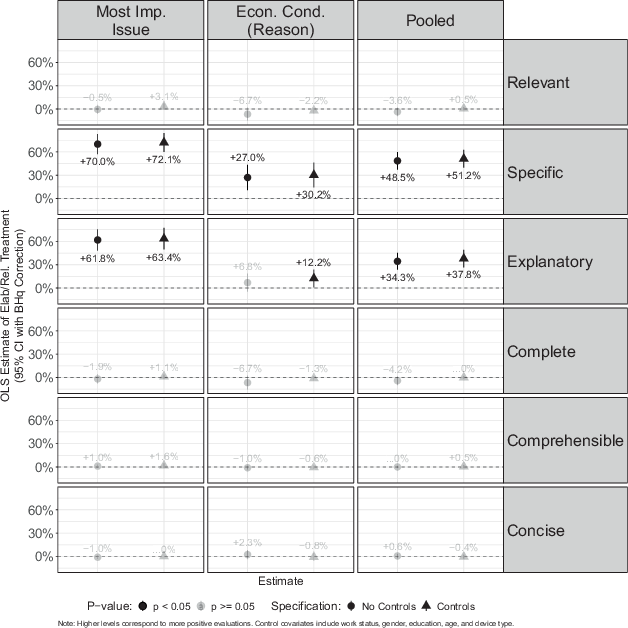
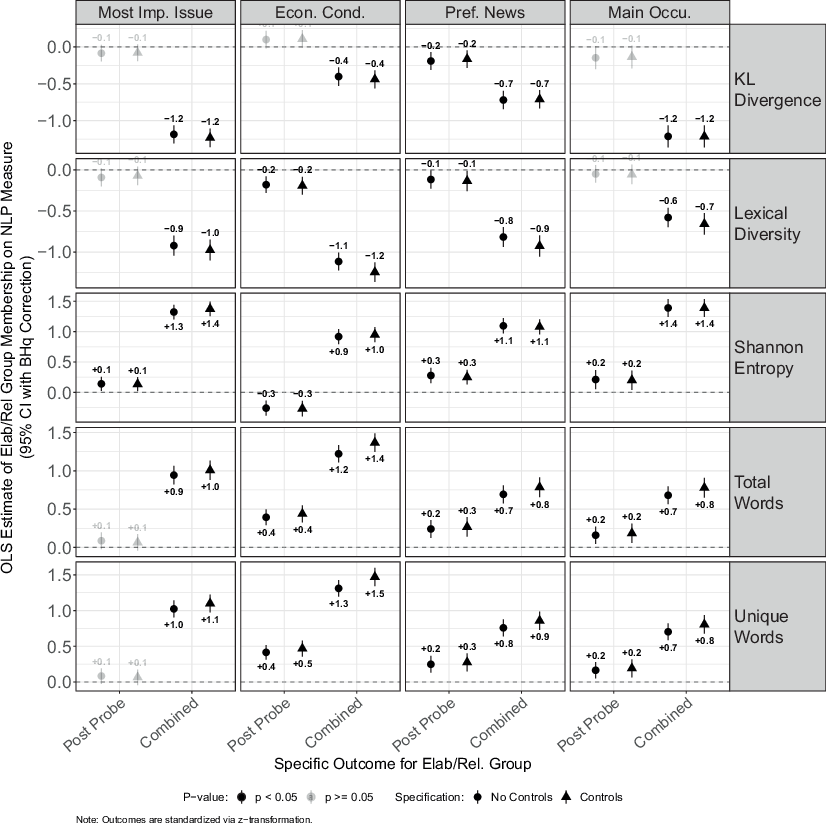
Fig. 3 presents the impacts of receiving probes in Treatment 2 on information content, operationalizing the outcome to be either the post-probe or combined seed/post-probe response, with seed responses in the Control condition as the baseline. It is trivial that both total and unique words increased with probing when the outcome is the combined response, though the mean word count in the post-probe response was higher than the mean word count in the seed response. While probing increased the Shannon Entropy in the subsequent response, it did not increase (and sometimes decreased) the KL divergence, meaning that new words in the post-probe response did not significantly deviate from the overall distribution of words, or ‘contribute new information’ to the sample. Lexical diversity also did not experience an effect, suggesting that new concepts may not have been systematically introduced post-probe that were not referenced in the first response. Subgroup-level estimates of treatments effects exhibit nearly no variation across these measures.
Completion patterns suggest probing does impact respondent experience (Appendix Table A2): dropouts were approximately twice as high in Treatment 1 (Confirmation Probing) compared to the Control Condition (n = 88 vs. n = 43). Similarly, interview duration was longer for both treatment conditions, particularly in Treatment 2 (Elaboration or Relevance Probing) where the average chat lasted twice as long (6 min.) as in the Control Condition (3 min.) (Appendix Table A3 and Table A4).
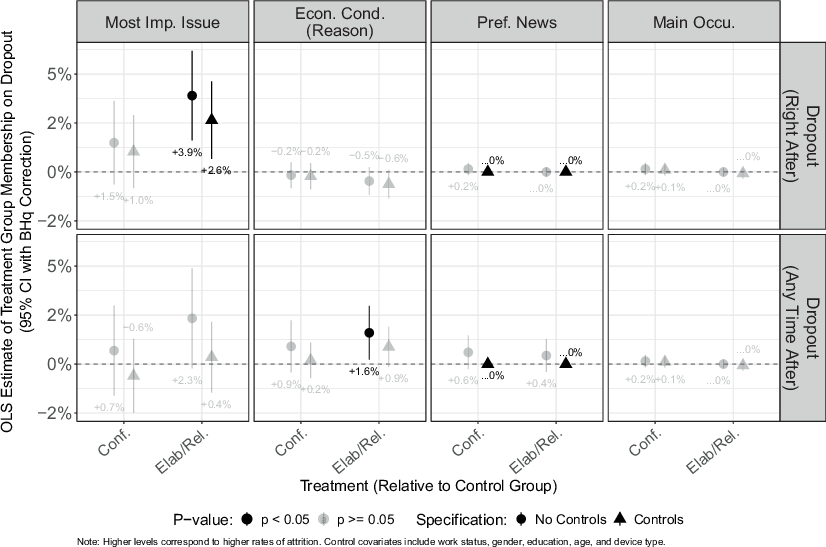
Fig. 4 provides a comparison of attrition (operationalized either as respondent drop-out immediately after or any time after exposure to a question) across questions in both Treatment 1 and Treatment 2 relative to rates in the Control condition. Confirmation probing does not appear to increase attrition propensity any time during the survey, while elaboration or relevance probing only increases the likelihood to drop out by 2–3% for the first question. That subsequent probes do not induce further attrition suggests that either respondents habituate to the probing design or that the first question probes weeds out respondents who cannot habituate, or both (Behr et al., 2014). We did not detect any heterogeneity in attrition effects across any subgroup for any question or treatment condition. Despite the greater attrition rates induced by elaboration/relevance probing, coded response categories between Treatment 1 and Treatment 2 remain highly correlated across questions (Appendix Figure A10).
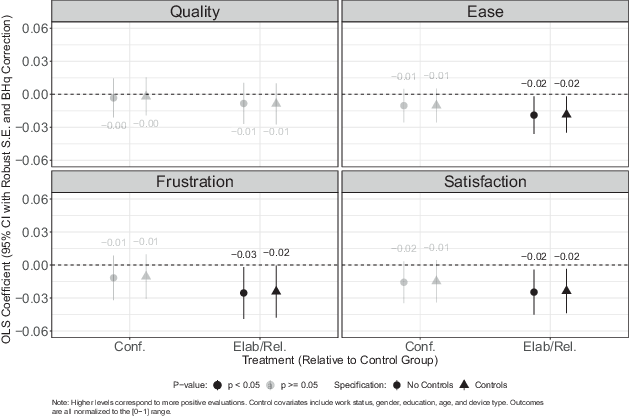
Lastly, we present how exposure to either treatment bundle of probes shapes the overall self-reported survey experience. As Fig. 5 shows, we find statistically significant but substantively small negative effects (in all cases, a movement of less than 0.05 on a normalized 0–1 scale) of receiving the full dosage of elaboration/relevance probing (Treatment 2) on ease, frustration, and satisfaction. Relative to the Control interview, the full sequence of confirmation probes introduced in Treatment 1 has no effect on any self-reported dimensions of respondents’ experience. These results are almost certainly biased in a positive direction: respondents who ‘survive’ to evaluate the survey experience are likely to have a less negative experience than respondents who did not complete the interview.
On respondent experience, we do observe differences in treatment effects by demographic group. In particular, when exposed to elaboration/relevance probing, mobile respondents tend to report lower ease of use and frustration, while desktop respondents only rate lower frustration. Older respondents (aged 60+) are the only age group to significantly rate lower ease of use as are respondents with a Bachelor’s degree. While such subgroup-level negative effects are statistically significant, as with sample-wide effects, they remain small in overall magnitude.
We have conducted one of the first evaluations of AI-assisted conversational interviewing on survey data quality and respondent experience. We begin by summarizing our findings and considering their practical implications for survey researchers.
Our results across all three research questions indicate mixed effects: using ‘off-the-shelf’ AI-assisted conversational interviewing can provide some modest data quality benefits at a minor cost to the survey experience.
For live coding open-ended responses (RQ1), we find evidence that LLMs can perform with a high degree of accuracy, precision, and recall across both opinion and factual reporting questions. Our chatbot achieved high accuracy in coding binary economic sentiment and occupation, but struggled more with news sources, possibly due to variability in naming conventions (e.g., “NYT” vs. “The New York Times”) and acronym ambiguity (e.g., “CNN”, an abbreviation for both a news network and type of machine learning model). Overall, AI-assisted coding performed better than chance, with a 74% confirmation rate among desktop users, slightly higher than 72% yielded by Schierholz et al. (2018)’s trained supervised learning algorithms. The errors we have identified in our evaluation could concretely inform further prompt engineering model fine-tuning efforts, for example focusing on the inclusion of boundary cases or highlighting counterexamples for a particular class category.
Nevertheless, our AI-assisted live coding suffered from an inflated false positive rate, suggesting a respondent tendency toward acquiescence bias, where respondents confirmed incorrect labels more often than they should have, and a model tendency toward ‘over-classification’ where the model classified responses into categories even when no category clearly applied. This presents a design trade-off for researchers between reduced human coding effort and the risk of systematic over-classification. Researchers many consider implement more nuanced live-coding formats, for example forcing the model to re-code when confidence is low, or offering multiple candidate classifications and prompting the respondent to select all that apply. In settings where precision is critical, such as classification of low-incidence or sensitive behaviors, researchers may implement corrective strategies such as class-balanced fine-tuning or encoding prior expectations for class proportions directly within the zero-shot prompt.
For probing open-ended responses (RQ2), we first found that without any survey-specific training, the AI-enhanced chatbot was generally able to identify when elaboration was needed. We find support for our initial expectation that elaboration and relevance probes improve data quality in some ways (response specificity, explanatory details, and word length), but not others (response completeness, relevance, or linguistic variation). Moreover, effects on response quality were not uniform across different question types, suggesting that some survey tasks are better suited for open-ended elaboration (e.g., specifying a subcategory of occupation).
These findings carry practical implications for survey design. Before implementing AI-assisted probing at scale, researchers should identify which questions are at elevated risk of quality concerns such as low relevance, insufficient comprehensibility, or ambiguity from pretest or pilot data. Probing should be selectively applied where downstream analyses require precision or classification granularity and avoided for items where baseline performance is already strong.
On response experience (RQ3), among individuals who were recruited into our experiment, we find that the overall integration of AI into survey interviewing incurs a cost, albeit a small one. The very first probe in the elaboration/relevance condition led to slightly higher dropout than the equivalent point in the standardized condition, but those who remained reported only slightly less favorable experiences, even after receiving multiple probes by the end of the survey. Moreover, dropout rates were significantly lower than in previous evaluations of open-ended probing (Behr et al., 2012; Holland & Christian, 2009; Neuert & Lenzner, 2021). These results reinforce evidence that open-ended follow-ups, particularly when dynamically delivered, may not necessarily be disruptive, though they should still be used judiciously. Confirmation probing also had little impact on attrition or respondent experience and introduced only minimal shifts in response category distributions. It is perhaps unsurprising that confirmation probes have fewer negative impacts than other probes, as prior research indicates that close-ended (e.g., confirm vs. don’t confirm) probes impose a lower cognitive burden than do open-ended probes (Neuert et al., 2023).
One practical recommendation that arises from our results is to administer open-ended probes sparingly, particularly for mobile users who are more sensitive to the respondent experience both in our study and previous research (De Bruijne & Wijnant, 2014). The effectiveness of probing did not appear to differ significantly between factual and opinion-based questions, though our evaluation is limited since only opinion-based questions included open-ended control responses for comparison.
This study design involved several trade-offs. A key strength is its breadth: we evaluated AI-assisted conversational interviewing across multiple dimensions of data quality and respondent experience to create a more holistic view of the technology’s implications. However, several limitations should be acknowledged.
Our implementation reflects performance using an “off-the-shelf” platform at a specific point in time. We view this as establishing a floor for current LLM capabilities, though future systems will likely perform better as the technology evolves. Due to constraints of our selected AI platform, elaboration and relevance probing were combined, preventing us from disentangling their separate effects. We also did not experimentally vary model prompts or parameter settings, which may influence data quality or respondent experience.
Respondents also knew they were interacting with an AI agent, which may not reflect future usage. It is also possible that responses do not represent human interactions with our interviewer if respondents themselves are engaging in ‘AI-assisted responding’ (Martherus et al., 2025; Westwood, 2025). Neither we, our platform vendor, nor our panel provider found any such indication of AI assistance. Lastly, our sample may not be representative of broader populations. While this study prioritizes internal validity over population-level inference, future researchers may wish to examine how these effects generalize through probability-based designs or careful sample re-weighting.
Despite promising results, researchers should apply LLMs in survey research with caution. As mentioned earlier, LLMs are fundamentally prone to hallucination in specific contexts even if ‘factory evaluations’ suggest such occurrences are minimal. While our conversational chatbots were not tasked with generating factual information, hallucinations in this context might involve ignoring or misapplying preprogrammed prompts used to guide probing behavior. As we have done in this study, researchers must extensively test any AI interviewing agents before taking them to the field, ensuring that they do not produce hallucinations that compromise data quality or respondent experience.
Additionally, just as complex or ambiguous survey questions can burden respondents, lengthy or vague answers may tax the chatbot, increasing response time and potentially reducing the quality of follow-up probes. Future studies should explore these limitations further by adjusting system parameters (e.g., temperature, tone), and testing different model configurations or types of models altogether.
LLMs are just one class of AI models capable of exhibiting human-like conversational behavior and alternatives may include small language models (SLMs) trained on more task-specific datasets or audio-based models designed for speech interaction. Trade-offs between speed, modality, task adaptability, and reasoning capacity will shape how well different AI agents perform in real-world data collection.
Improvements to the conversational interface itself might address problems of attrition, response bias, and poor respondent experience. Introducing ‘skip’ buttons into the chat interface could, for instance, convert attrition into non-response, providing a question-by-question lever for respondents to alleviate cognitive burden without exiting the survey. The acquiescence bias associated with ‘yes/no’ confirmation probes might be mitigated by displaying the chatbot’s coded category as the default or suggested choice in a categorical, rather than binary, confirmation probe. Researchers could also approach the process of live-coding using an entirely different mixed-format approach, where close-ended options are paired with an “other, specify” input, followed by confirmation probing only on “other specify” responses.
Finally, future studies might consider other AI-assisted interviewing techniques such as the dynamic generation of motivational statements or respondent feedback, both shown to increase respondent engagement in conventional probing (Dillman et al., 2008; Oudejans & Christian, 2010). Expanding beyond LLM-based ‘chatbots’ to audio-based conversational agents could be fruitful, given the differing information (Gavras et al., 2022) as well as rich context found in oral responses (Höhne et al., 2024) relative to written responses. Future work should carefully balance these benefits against potential costs in respondent experience. It is also important to recognize that these models are evolving rapidly. The benchmarks and evaluation metrics cited in this study, including human preference ratings, performance on truthfulness and toxicity benchmarks, and extensive pre-testing for our particular use case, justify our use of the SmartProbe model at the time of fielding (see Appendix A1). However, they may become outdated as new models with improved performance and safety characteristics become available. Researchers should therefore treat model selection as a moving target, continuously reassessing what constitutes “state-of-the-art” for a given task and context.
This work was supported by a venture fund award from the NORC Business Ventures & Innovation unit. All research protocols in this study were approved by the institutional review board at NORC at the University of Chicago. Research subjects provided informed consent and confirmation of eligibility prior to participation. The authors would like to thank Skky Martin and Akari Oya for excellent research assistance. Additionally, we thank Ting Yan and Jeff Dominitz for feedback and advice. Replication code and data are available at the Harvard Dataverse (Barari et al., 2025).
Antoun, C., Couper, M. P., & Conrad, F. G. (2017). Effects of mobile versus PC web on survey response quality: a crossover experiment in a probability web panel. Public Opinion Quarterly, 81(S1), 280–306. https://doi.org/10.1093/poq/nfw088. →
Argyle, L. P., Busby, E. C., Fulda, N., Gubler, J. R., Rytting, C., & Wingate, D. (2023). Out of one, many: using language models to simulate human samples. Political Analysis, 31(3), 337–351. https://doi.org/10.1017/pan.2023.2. →
Bail, C. A. (2024). Can generative AI improve social science? Proceedings of the National Academy of Sciences, 121(21), e2314021121. https://doi.org/10.1073/pnas.2314021121. a, b
Bang, Y., Cahyawijaya, S., Lee, N., Dai, W., Su, D., Wilie, B., Lovenia, H., Ji, Z., Yu, T., Chung, W., Do, Q. V., Xu, Y., & Fung, P. (2023). A Multitask, Multilingual, Multimodal Evaluation of ChatGPT on Reasoning, Hallucination, and Interactivity. In J. C. Park, Y. Arase, B. Hu, W. Lu, D. Wijaya, A. Purwarianti & A. A. Krisnadhi (Eds.), Proceedings of the 13th International Joint Conference on Natural Language Processing and the 3rd Conference of the Asia-Pacific Chapter of the Association for Computational Linguistics (Vol. 1, pp. 675–718). Association for Computational Linguistics. https://doi.org/10.18653/v1/2023.ijcnlp-main.45. →
Barari, S., Angbazo, J., Wang, N., Christian, L. M., Dean, E., & Sepulvado, B. (2025). Replication data for: aI-assisted conversational interviewing: effects on data quality and respondent experience [Dataset]. Harvard Dataverse. https://doi.org/10.7910/DVN/NZX3OD. →
Behr, D., Kaczmirek, L., Bandilla, W., & Braun, M. (2012). Asking probing questions in web surveys: which factors have an impact on the quality of responses? Social Science Computer Review, 30(4), 487–498. https://doi.org/10.1177/0894439311435305. a, b
Behr, D., Bandilla, W., Kaczmirek, L., & Braun, M. (2014). Cognitive probes in web surveys: on the effect of different text box size and probing exposure on response quality. Social Science Computer Review, 32(4), 524–533. https://doi.org/10.1177/0894439313485203. →
Behr, D., Meitinger, K., Braun, M., & Kaczmirek, L. (2017). Web probing—implementing probing techniques from cognitive, interviewing in web surveys with the goal to assess the validity of survey questions (GESIS Survey Guidelines)Web probing—implementing probing techniques from cognitive, interviewing in web surveys with the goal to assess the validity of survey questions (GESIS Survey Guidelines) (Version 1.0). GESIS—Leibniz Institute for the Social Sciences. https://doi.org/10.15465/GESIS-SG_EN_023 a, b, c, d
Benjamini, Y., & Hochberg, Y. (1995). Controlling the false discovery rate: a practical and powerful approach to multiple testing. Journal of the Royal Statistical Society. Series B (Methodological), 57(1), 289–300. →
Billiet, J., & Loosveldt, G. (1988). Improvement of the quality of responses to factual survey questions by interviewer training. The Public Opinion Quarterly, 52(2), 190–211. a, b
Birt, L., Scott, S., Cavers, D., Campbell, C., & Walter, F. (2016). Member checking: a tool to enhance trustworthiness or merely a nod to validation? Qualitative Health Research, 26(13), 1802–1811. https://doi.org/10.1177/1049732316654870. →
Bisbee, J., Clinton, J. D., Dorff, C., Kenkel, B., & Larson, J. M. (2024). Synthetic replacements for human survey data? The perils of large language models. Political Analysis, 32(4), 401–416. https://doi.org/10.1017/pan.2024.5. →
Brown, T. B., Mann, B., Ryder, N., Subbiah, M., Kaplan, J., Dhariwal, P., Neelakantan, A., Shyam, P., Sastry, G., Askell, A., Agarwal, S., Herbert-Voss, A., Krueger, G., Henighan, T., Child, R., Ramesh, A., Ziegler, D. M., Wu, J., Winter, C., & Amodei, D. (2020). Language models are few-shot learners. arXiv. https://doi.org/10.48550/arXiv.2005.14165. a, b
Conrad, F. G., & Schober, M. F. (2000). Clarifying question meaning in a household telephone survey. Public Opinion Quarterly, 64(1), 1–28. https://doi.org/10.1086/316757. a, b
Conrad, F. G., Couper, M. P., Tourangeau, R., & Galesic, M. (2005). Interactive feedback can improve the quality of responses in web surveys. Proceedings of the ASA Section on Survey Research Methods. a, b, c
Conrad, F. G., Schober, M. F., & Coiner, T. (2007). Bringing features of human dialogue to web surveys. Applied Cognitive Psychology, 21(2), 165–187. https://doi.org/10.1002/acp.1335. →
Couper, M. P., Antoun, C., & Mavletova, A. (2017). Mobile web surveys. In Total survey error in practice (pp. 133–154). Wiley. https://doi.org/10.1002/9781119041702.ch7. →
De Bruijne, M., & Wijnant, A. (2014). Improving response rates and questionnaire design for mobile web surveys. Public Opinion Quarterly, 78(4), 951–962. →
Dillman, D. A., Smyth, J. D., & Christian, L. M. (2008). Internet, mail, and mixed-mode surveys: the tailored design method. In Internet, mail, and mixed-mode surveys: the tailored design method (p. xii, 499). Wiley. https://www.proquest.com/docview/1095630275?pq-origsite=summon&sourcetype=Books. →
Feldman, J. J., Hyman, H., & Hart, C. W. (1951). A field study of interviewer effects on the quality of survey data. Public Opinion Quarterly, 15(4), 734. https://doi.org/10.1086/266357. a, b
Fellegi, I. P. (1964). Response variance and its estimation. Journal of the American Statistical Association. https://doi.org/10.1080/01621459.1964.10480747. a, b
Fowler, F., & Mangione, T. (1990). Standardized survey interviewing. SAGE. https://doi.org/10.4135/9781412985925. a, b
Gavras, K., Höhne, J. K., Blom, A. G., & Schoen, H. (2022). Innovating the collection of open-ended answers: the linguistic and content characteristics of written and oral answers to political attitude questions. Journal of the Royal Statistical Society Series A: Statistics in Society, 185(3), 872–890. https://doi.org/10.1111/rssa.12807. →
Gomila, R. (2021). Logistic or linear? Estimating causal effects of experimental treatments on binary outcomes using regression analysis. Journal of Experimental Psychology: General, 150(4), 700–709. https://doi.org/10.1037/xge0000920. →
Groves, R. M. (2005). Survey errors and survey costs. John Wiley & Sons. →
Groves, R. M. Jr, Couper, M. P., Lepkowski, J. M., Singer, E., & Tourangeau, R. (2009). Survey methodology. Wiley. a, b, c
Gweon, H., & Schonlau, M. (2024). Automated classification for open-ended questions with BERT. Journal of Survey Statistics and Methodology, 12(2), 493–504. https://doi.org/10.1093/jssam/smad015. →
Hadler, P. (2025). The effects of open-ended probes on closed survey questions in web surveys. Sociological Methods & Research, 54(1), 106–139. https://doi.org/10.1177/00491241231176846. a, b
He, Z., & Schonlau, M. (2022). A model-assisted approach for finding coding errors in manual coding of open-ended questions. Journal of Survey Statistics and Methodology, 10(2), 365–376. https://doi.org/10.1093/jssam/smab022. →
Heyde, L., von der Haensch, A.-C., Weiß, B., & Daikeler, J. (2025). Ain’t nothing but a survey? Using large language models for coding German open-ended survey responses on survey motivation. arXiv:2506.14634. https://doi.org/10.48550/arXiv.2506.14634. a, b
Höhne, J. K., Kern, C., Gavras, K., & Schlosser, S. (2024). The sound of respondents: predicting respondents’ level of interest in questions with voice data in smartphone surveys. Quality & Quantity, 58(3), 2907–2927. →
Holland, J. L., & Christian, L. M. (2009). The influence of topic interest and interactive probing on responses to open-ended questions in web surveys. Social Science Computer Review, 27(2), 196–212. https://doi.org/10.1177/0894439308327481. a, b
Hubbard, F. A., Conrad, F. G., & Antoun, C. (2020). The benefits of conversational interviewing are independent of who asks the questions or the types of questions they ask. Survey Research Methods, 14(5), 5. https://doi.org/10.18148/srm/2020.v14i5.7617. a, b
Ji, Z., Lee, N., Frieske, R., Yu, T., Su, D., Xu, Y., Ishii, E., Bang, Y. J., Madotto, A., & Fung, P. (2023). Survey of hallucination in natural language generation. ACM Comput. Surv., 55(12), 248:1–248:38. https://doi.org/10.1145/3571730. →
Kojima, T., Gu, S., Reid, M., Matsuo, Y., & Iwasawa, Y. (2022). Large language models are zero-shot reasoners. Advances in Neural Information Processing Systems, 35, 22199–22213. →
Krosnick, J. A. (1999). Survey research. Annual Review of Psychology, 50, 537–567. https://doi.org/10.1146/annurev.psych.50.1.537. a, b
Krosnick, J. A. (2017). Questionnaire design. In The Palgrave handbook of survey research (pp. 439–455). Palgrave Macmillan. https://doi.org/10.1007/978-3-319-54395-6_53. →
Krosnick, J. A., & Alwin, D. F. (1987). An evaluation of A cognitive theory of response-order effects in survey measurement. Public Opinion Quarterly, 51(2), 201–219. https://doi.org/10.1086/269029. →
Kuha, J., Butt, S., Katsikatsou, M., & Skinner, C. J. (2018). The effect of probing “don’t know” responses on measurement quality and nonresponse in surveys. Journal of the American Statistical Association, 113(521), 26–40. →
Martherus, J., Podkul, A., Cook, E., & Liebowitz, R. (2025). How to detect AI-assisted interviews in online surveys. Survey Practice. https://doi.org/10.29115/SP-2025-0016. →
Mason, J. (1997). Qualitative researching. Thousand Oaks: SAGE. →
Mellon, J., Bailey, J., Scott, R., Breckwoldt, J., Miori, M., & Schmedeman, P. (2024). Do AIs know what the most important issue is? Using language models to code open-text social survey responses at scale. Research & Politics, 11(1), 20531680241231468. https://doi.org/10.1177/20531680241231468. a, b
Neuert, C. E., & Lenzner, T. (2021). Effects of the number of open-ended probing questions on response quality in cognitive Online pretests. Social Science Computer Review, 39(3), 456–468. https://doi.org/10.1177/0894439319866397. a, b, c
Neuert, C. E., Meitinger, K., & Behr, D. (2023). Open-ended versus closed probes: assessing different formats of web probing. Sociological Methods & Research, 52(4), 1981–2015. https://doi.org/10.1177/00491241211031271. →
Olson, K., & Smyth, J. D. (2015). The effect of CATI questions, respondents, and interviewers on response time. Journal of Survey Statistics and Methodology, 3(3), 361–396. https://doi.org/10.1093/jssam/smv021. a, b
Oudejans, M., & Christian, L. M. (2010). Using interactive features to motivate and probe responses to open-ended questions. In Social and behavioral research and the Internet. Routledge. →
Ouyang, L., Wu, J., Jiang, X., Almeida, D., Wainwright, C. L., Mishkin, P., Zhang, C., Agarwal, S., Slama, K., Ray, A., Schulman, J., Hilton, J., Kelton, F., Miller, L., Simens, M., Askell, A., Welinder, P., Christiano, P., Leike, J., & Lowe, R. (2022). Training language models to follow instructions with human feedback. Advances in Neural Information Processing Systems. https://doi.org/10.48550/arXiv.2203.02155. →
Puri, R., & Catanzaro, B. (2019). Zero-shot text classification with generative language models. 3rd Workshop on Meta-Learning at NeurIPS 2019, 10.12.. http://arxiv.org/abs/1912.10165 →
Schierholz, M., & Schonlau, M. (2021). Machine learning for occupation coding—A comparison study. Journal of Survey Statistics and Methodology, 9(5), 1013–1034. https://doi.org/10.1093/jssam/smaa023. a, b, c
Schierholz, M., Gensicke, M., Tschersich, N., & Kreuter, F. (2018). Occupation coding during the interview. Journal of the Royal Statistical Society Series A: Statistics in Society, 181(2), 379–407. https://doi.org/10.1111/rssa.12297. a, b, c, d
Schober, M. F., & Conrad, F. G. (1997). Does conversational interviewing reduce survey measurement error? Public Opinion Quarterly, 61(4), 576–602. https://doi.org/10.1086/297818. a, b, c, d
Schuman, H., & Presser, S. (1979). The open and closed question. American Sociological Review, 44(5), 692–712. https://doi.org/10.2307/2094521. →
Seltzer, J., Pan, J., Cheng, K., Sun, Y., Kolagati, S., Lin, J., & Zong, S. (2023). SmartProbe: a virtual moderator for market research surveys. No. arXiv:2305.08271. https://doi.org/10.48550/arXiv.2305.08271. →
Suchman, L., & Jordan, B. (1990). Interactional troubles in face-to-face survey interviews. Journal of the American Statistical Association. https://doi.org/10.1080/01621459.1990.10475331. a, b, c
Tourangeau, R., Rips, L. J., & Rasinski, K. (2000). The psychology of survey response. Cambridge University Press. https://doi.org/10.1017/CBO9780511819322. a, b, c
Vaswani, A., Shazeer, N., Parmar, N., Uszkoreit, J., Jones, L., Gomez, A. N., Kaiser, L., & Polosukhin, I. (2023). Attention is all you need. arXiv:1706.03762. https://doi.org/10.48550/arXiv.1706.03762. →
Velez, Y. R., & Liu, P. (2024). Confronting core issues: a critical assessment of attitude polarization using tailored experiments. American Political Science Review. https://doi.org/10.1017/S0003055424000819. →
Weizenbaum, J. (1966). ELIZA-A Computer Program For the Study of Natural Language Communication Between Man And Machine. Communications of the ACM, 9(1), 36–45. https://doi.org/10.1145/365153.365168 →
West, B. T., & Blom, A. G. (2017). Explaining interviewer effects: a research synthesis. Journal of Survey Statistics and Methodology, 5(2), 175–211. a, b
West, B. T., Conrad, F. G., Kreuter, F., & Mittereder, F. (2018). Can conversational interviewing improve survey response quality without increasing interviewer effects? Journal of the Royal Statistical Society Series A: Statistics in Society, 181(1), 181–203. https://doi.org/10.1111/rssa.12255. a, b, c
Westwood, S. J. (2025). The potential existential threat of large language models to online survey research. Proceedings of the National Academy of Sciences, 122(47), e2518075122. https://doi.org/10.1073/pnas.2518075122. →
Wuttke, A., Aßenmacher, M., Klamm, C., Lang, M. M., Würschinger, Q., & Kreuter, F. (2024). AI conversational interviewing: transforming surveys with LLMs as adaptive interviewers. arXiv:2410.01824. https://doi.org/10.48550/arXiv.2410.01824. a, b, c, d
Xiao, Z., Zhou, M. X., Liao, Q. V., Mark, G., Chi, C., Chen, W., & Yang, H. (2020). Tell me about yourself: using an AI-powered Chatbot to conduct conversational surveys with open-ended questions. ACM Transactions on Computer-Human Interaction, 27(3), 15:1–15:37. https://doi.org/10.1145/3381804. a, b, c
Yan, T., & Olson, K. (2013). Analyzing Paradata to Investigate Measurement Error. In Improving Surveys with Paradata (pp. 73–95). Wiley. https://doi.org/10.1002/9781118596869.ch4. →