Context Matters: Understanding Measurement Noninvariance in Global Solidarity
848510.18148/srm/2026.v20i2.8485Context Matters: Understanding Measurement Noninvariance in Global Solidarity
https://orcid.org/0000-0003-2699-2768Vera
Lomazzi vera.lomazzi@unibg.it University of Bergamo,
Department of ManagementBergamoItaly
https://orcid.org/0000-0002-3780-3101Ann-Kathrin
Reinl annkathrin.reinl@eui.eu
https://orcid.org/0000-0003-1595-6948Daniel
Seddig daniel.seddig@kfn.de Criminological Research Institute of Lower Saxony (KFN)HannoverGermany
European University Institute,
Robert Schuman Centre for Advanced StudiesFiesoleItalyGESIS Leibniz Institute for the Social SciencesMannheimGermany
193142026European Survey Research Association
Solidarity within and between societies is a widely discussed topic these days. A multitude of global challenges makes the issue of social togetherness more relevant than ever before. But can we truly measure global solidarity in a comparative way? Or is our understanding shaped by the cultural, demographic, economic, and political contexts in which individuals find themselves? This study addresses these questions using data from the European Values Study 2017, which covers 21 European Union member states. By applying multigroup and multilevel structural equation modelling, we show that achieving cross-national measurement invariance of global solidarity is indeed difficult and that accounting for contextual and cultural differences can help explain why certain measurements lack equivalence. The analysis reveals that the measurements are subject to varying culturally driven interpretations about how people interpret survey items on global solidarity, particularly regarding concern for Europeans and immigrants. Varying cultural views on what is meant by ‘Europeans’, or how immigrants should be treated, and factors such as immigrant influx, cultural orientation, prioritising equal treatment, or cultural predominance affect how individuals express concern for immigrants. These differences in cultural and national contexts contribute to measurement noninvariance.
Editors’ note: This paper by Vera Lomazzi and colleagues was reviewed and then accepted in December 2025, before Vera Lomazzi became editor of Survey Research Methods.
Supplementary Information
The online version of this article (https://doi.org/10.18148/srm/2026.v20i2.8485) contains supplementary material.
1 Introduction
Latent theoretical concepts with vague definitions, such as love, trust, or cohesion, pose significant challenges for empirical comparison across different groups and contexts. Among these, solidarity stands out as particularly complex. Solidarity manifests in diverse forms and is exhibited by various actors, encompassing a wide spectrum of attitudes and actions contingent upon prevailing circumstances and underlying principles (Sangiovanni, 2013; Thijssen and Verheyen, 2022). In the European context of permanent crisis—resulting from the fallout of the economic crisis, the refugee crisis, the Covid-19 pandemic, and the war in Ukraine—solidarity has become a crucial topic (Katsanidou et al., 2022; Wallaschek, 2020).
For comparative analyses of solidarity, ensuring a shared understanding of the concept is imperative. This enables the examination of attitudes across different groups, both within and between nationalities. Solidarity has been often defined as a fuzzy concept (Rusu, 2012; Bartenstein, 2021; Quandt and Lomazzi, 2023) because of its multiple semantic interpretations, which also lead to methodological challenges when scholars aim to operationalize this concept and make cross-national comparisons. While some studies have explored attitudes towards national and EU solidarity within countries (Baute et al., 2018; Ignácz, 2021), others have scrutinised dimensions of EU solidarity across a limited selection of member states (Reinl, 2022). These investigations, built on the assessment of measurement equivalence across countries to evaluate cross-national comparability (Leitgöb et al., 2023), revealed that the comparability of the measurement of solidarity was limited and sometimes arguable.
Other scholars, expanding on the notion of interindividual solidarity, expressed as altruistic attitudes and empathy toward different target groups, have considered its multiple forms encompassing global solidarity in conjunction with social and local dimensions (Abela, 2004; Kankaraš and Moors, 2009; Lomazzi, 2021; Quandt and Lomazzi, 2023). Global solidarity extends beyond local borders to target individuals in other states, migrants, and humanity at large. However, a recent empirical assessment focusing on Europe (Lomazzi, 2021) underscored the noninvariant nature of global solidarity measurement. In other words, measurement of global solidarity is not fully comparable across countries, creating challenges for comparative research.
This is where our study comes in. Building on Lomazzi’s (2021) findings, the current study aims to address both empirical and theoretical uncertainties regarding global solidarity by investigating the sources of its measurement noninvariance. It posits that individuals across countries interpret global solidarity differently. These variations may arise from country-specific contexts, where people understand the facets of solidarity measured by the survey items in ways shaped by prevailing socio-economic, cultural, demographic, or political conditions. To empirically examine this hypothesis, the study analyses data from the European Values Study (EVS) 2017 that includes measurement of interindividual solidarity spanning social, local and global dimensions of solidarity and covering a large set of European countries. By focusing on global solidarity, multigroup confirmatory factor analysis (MGCFA) is employed to test whether the measurements of this dimension are indeed invariant across countries as pointed out by Lomazzi 2021. Building upon that, multilevel structural equation modelling (MLSEM) is then used to explore the reasons for measurement inequivalences between countries. In particular, the study investigates whether contextual variables—namely cultural, demographic, economic, and political factors—explain differences in item scores (intercepts) among countries. After discussing the results, the paper provides some final reflections on the comparability of global solidarity and its implications.
Our empirical findings indicate that the variance in perceptions of global solidarity indeed stems from inherent differences between countries. Country-specific contexts matter and significantly influence public understandings of global solidarity. More specifically, the findings show that the country variability of cultural and demographic aspects such as feelings of closeness to Europe, levels of immigrant influx, exposure to immigration, and cultural values of embeddedness and egalitarianism lead to a variety of culturally driven interpretations that statistically explain the lack of cross-national equivalence in global solidarity. Thus, a broader implication of our work is that election and political campaigns across EU countries, which frequently emphasize issues such as equal rights or solidarity policies towards immigrants or fellow Europeans, may be interpreted differently depending on the local cultural context. These context-dependent interpretations could, in turn, produce varying effects on individuals’ attitudes and political preferences. Social and political actors should keep this in mind when attempting to mobilize support across countries.
2 Interindividual Solidarity and its Global Dimension
Wilde (2007, p. 171) defines interindividual solidarity as a shared feeling of sympathy among individuals within and between groups, motivating supportive actions and advocating for social inclusion. Consequently, the examination of interindividual solidarity can encompass both observable behaviours and actions (such as active participation in civil society organisations, advocating for the rights of marginalised groups, or donating to those in need) as well as underlying self-transcendent values and attitudes guiding such behaviours. In quantitative research, the latter concept is often operationalised as ‘informal solidarity’ (Oorschot, Arts, and Halman, 2005, p. 39), referring to individuals’ concern for the well-being of specific target groups characterised by various needs and proximity to the respondents.
This conceptualisation has recently garnered attention from scholars exploring political preferences, anti-democratic tendencies, and attitudes towards Europeanisation (Košťál and Klicperová-Baker, 2015; Langsæther and Stubager, 2019).
This study adopts the interpretation of solidarity in its abstract sense of empathy towards others (Thijssen and Verheyen, 2022) as its conceptual framework for empirical analysis. Attitudes of solidarity can be addressed towards specific groups of people in needs (e.g., people with chronical illnesses or disabilities, living in poverty, elderly people, etc.). This aspect of solidarity has been defined as social solidarity (Abela, 2004; Kankaraš and Moors, 2009) because it addresses social groups in relation to specific social needs. Other dimensions of interindividual solidarity refer to the distance between the person expressing empathy and its target. In this perspective, scholars refer to the localization of solidarity and to the dynamics related to identification processes with closer communities (i.e., local dimension) and to broader altruistic feelings in which the identification process takes place at a higher level of abstraction, recognizing the common human nature as the fundamental bonding tie between individuals (i.e., global dimension).
Bazzani (2025) introduces the term “altruistic solidarity” to describe a different form of interindividual solidarity than those historically identified by Durkheim as mechanical and organic solidarity. While mechanical solidarity builds on shared beliefs and bonding ties with the close community of belonging and organic solidarity refers to the functional interdependence among individuals in the same society, altruistic solidarity transcends self-interest, transforming it in a broader sense of belonging and interdependency that goes beyond the closer community. In this conceptualization, Bazzani (2025, p. 15) refers to the universalistic moral obligation that derives from this and that results in caring for the “welfare of individuals and groups separated geographically, temporally or relationally from those offering support”.
The localization of solidarity is crucial in debates concerning global challenges, such as pandemics and health issues (Dany, 2021) migration flows, especially those led by environmental disasters and wars (Schulpen and Huyse, 2017; Eckenwiler et al., 2012), inequalities and violation of human rights (Garbe, 2024; Ariemma et al., 2025). In this perspective, in the current study we adopt the term global solidarity, in contrast to local solidarity, to more specifically refer to the altruistic solidarity (Bazzani, 2025) expressed towards the generic others more geographically distant, where bonding ties build on the recognized common human existence instead of on the belonging to the same local community.
3 Cross-national Comparability of Interindividual Global Solidarity
Despite its significance in both substantive research and daily life, the concept of solidarity has received limited cross-country evaluation thus far. More specifically, there has been scant exploration into whether solidarity is uniformly understood across societal groups, hindering the comparability of its measurement across nations. An exception is Reinl’s (2022) study, which compared the concept of transnational EU solidarity across three countries and found partial scalar invariance. In addition, Lomazzi (2021) assessed the comparability of solidarity attitudes as measured by the EVS. In this framework, solidarity is conceptualised via three sub-dimensions: social solidarity (concern for the living conditions of the elderly, those with disabilities or illnesses, and the unemployed), local solidarity (concern for the living conditions of people in the respondent’s neighbourhood, region, or country), and global solidarity (concern for the living conditions of Europeans, migrants, and humanity at large). When multigroup confirmatory factor analysis (MGCFA) was applied, only metric invariance was achieved. Even the use of a less strict approach, namely alignment optimisation (Asparouhov and Muthén, 2014), indicated too many noninvariant parameters to consider the comparison of factor means trustworthy (Asparouhov and Muthén, 2014). The complementary outputs of the MGCFA and alignment optimisation were used as a diagnostic tool to identify where the model was less invariant. The dimension of global solidarity was clearly the source of non-equivalence, particularly regarding items that address concerns about the living conditions of Europeans and immigrants.
Based on these insights, the current study empirically investigates the sources of noninvariance in global solidarity as defined by the EVS (2020a).
4 Reasons for Measurement Noninvariance
Ensuring that respondents from diverse groups (e.g., countries) perceive and interpret a concept measured through survey questions in a consistent manner is crucial for enabling meaningful comparisons, theory testing, and substantive generalisations. However, several factors can undermine such comparability. Firstly, measurement invariance may be compromised by methodological biases. Issues such as variations in item translations, different sampling designs, or disparities in data collection methods between groups can lead to distinct cognitive processes in responding and variations in response styles (Hox, De Leeuw, and Zijlmans, 2015; Persson and Solevid, 2014). Secondly, beyond methodological biases, structural and cultural elements of societies can also contribute to contextual differences regarding understanding and interpreting survey items, thereby hindering cross-cultural comparability (Meitinger et al., 2020; Seddig and Lomazzi, 2019). For example, measurement bias may arise from interactions between the characteristics of survey items used to measure latent constructs and the cultural and socioeconomic backgrounds of respondents. Differences in responses between age groups or educational groups might exist due to varying cognitive abilities and experiences, while gender differences or even differences between countries may occur due to distinct socialisation patterns. Especially when the wording and content of items are ambiguous, it is likely that context will guide item interpretation (e.g., Braun, 2009). Moreover, when context information is available, it can be used to explain measurement biases.
In the empirical study conducted by Lomazzi (2021), an internationally comparative survey was employed. Given the rigorous data standards of the EVS (Lujikx et al., 2020), methodological biases are unlikely to account for measurement invariance in global solidarity. Instead, the observed noninvariance is more likely rooted in the cultural, demographic, economic, and political diversity across the surveyed countries. Lomazzi’s (2021) findings highlight how two specific survey items present challenges in cross-country comparisons: one addressing concerns towards Europeans and the other towards immigrants. Both items share a common issue of interpretation, allowing respondents latitude in defining these groups. For instance, it is uncertain whether respondents, when responding to questions about Europeans, predominantly consider EU citizens as a whole, their geographically adjacent countries, or perhaps some specific European region. Similarly, the term ‘immigrant’ lacks specificity (Blinder, 2015) in the respondents’ view—does it refer to an individual from another European country, from another continent, or an asylum seeker? These conceptual ambiguities provide initial insights into why certain variables may struggle to achieve measurement invariance, as the interpretation of such terms is likely shaped by structural as well as cultural country-specific contexts.
To start with potential structural contexts that might affect measurement invariance, differences in the interpretation of survey items may be related to the economic strength of a country (Davidov et al. 2012). In wealthier nations, individuals are more frequently exposed to extensive public debates on both immigration and asylum policies, which may lead them to differentiate more clearly between various groups, such as labour migrants and refugees. As a result, the term “immigrants” may be more readily associated with work-related migration in economically stronger countries, whereas in less affluent contexts—where international labour mobility is less common (see for instance Eurostat 2025)—it may be more closely linked to refugees or asylum seekers. These differences in public discourse and exposure may cause respondents across countries to interpret survey items referring to global solidarity in distinct ways, potentially leading to measurement noninvariance.
H1: The items referring to concerns towards immigrants and European are expected to operate differently depending on a country’s level of economic strength, leading to greater measurement noninvariance across countries.
Differences in the interpretation of immigration-related items may also depend on individuals’ exposure to immigration in their everyday environment (Davidov et al., 2018; Karreth et al., 2015; Kent, 2022). For instance, individuals living in countries with higher exposure to asylum seekers may primarily associate the term “immigrants” with this group, whereas those in countries with higher levels of work-related migration may associate it mainly with labour migrants. These contextual differences in exposure help explain why items referring to immigrants may operate differently depending on a society’s dominant type of immigrant population.
H2: The item referring to concerns towards immigrants is expected to operate differently depending on a country’s dominant type of immigrant population (e.g., asylum seekers vs. work-related migrants), leading to greater measurement noninvariance across countries.
Similarly, the political context in a country may shape how people interpret items referring to Europeans. In countries where strong Eurosceptic parties1 are present, the European Union (EU) and its citizens are more frequently discussed in political debates, often in a critical or polarized manner (Dutceac Segesten and Bossetta, 2019). As a result, respondents in these contexts may associate the term “Europeans” more specifically with citizens of EU member states or with the political project of the EU itself. In contrast, in countries where Eurosceptic parties play a minor role and the EU is less salient in public discourse, the term “Europeans” may be understood in a broader or less politically charged sense. These differences in salience and framing could cause the item referring to concerns towards Europeans to operate differently across countries, thereby contributing to measurement noninvariance.
H3: The item referring to concerns towards Europeans is expected to operate differently depending on a country’s success of Eurosceptic parties, leading to greater measurement noninvariance across countries.
Another structural factor that could explain potential noninvariance is people’s general emotional attachment to Europe. When this attachment is strong, respondents may interpret the term “Europeans” in a more inclusive, geographically broader sense. In contrast, when attachment to Europe is weak, individuals may not envision such an extended community when encountering the term “Europeans” in survey items. These differences in the scope of interpretation could lead to variation in item functioning across countries, thereby contributing to measurement noninvariance.
H4: The item referring to concerns towards Europeans is expected to operate differently depending on people’s more general emotional attachment to Europe, leading to greater measurement noninvariance across countries.
Lastly, broader cultural values could also play a pivotal role. Cultural values are the rationale for social institutions as well as economic and political systems, and they express the shared ideas of what is desirable in a specific culture, shaping goals and priorities at the collective level. Schwartz (2006) provided a theory of cultural value orientations based on his theory of individual differences in value priorities (Schwartz, 1994) and described seven cultural value orientations: harmony, hierarchy, mastery, embeddedness, egalitarianism, intellectual autonomy, and affective autonomy. In this study, we focus on the cultural values of embeddedness and egalitarianism, which, by theoretical definition, can potentially explain cultural differences in the interpretation of the concept of solidarity by country. Egalitarianism relates to the goal of recognising and defending other individuals’ interests. The benefit and welfare of others is at the core of egalitarianism: culturally open and tolerant countries (‘cultural egalitarianism’) may exhibit a stronger inclination towards cross-border solidarity (Reinl et al., 2024). The cultural value of embeddedness refers to societies in which people are seen as entities deeply embedded in the collectivity. Such societies stress the importance of maintaining the status quo and the traditional order, and they restrain actions that negatively affect in-group solidarity (‘cultural embeddedness’). As for other attitudes involving intra- and inter-group relationships (Davidov et al., 2012; Seddig and Lomazzi, 2019), different prevailing cultural orientation can be responsible for differential response patterns concerning solidarity issues. This is because the shared “conceptions of what is good and desirable in the culture” (Schwartz, 2006, p. 139) with regard to who deserve solidarity vary across cultural contexts.
H5: The items referring to concerns towards immigrants and Europeans are expected to operate differently depending on people’s broader cultural values, leading to greater measurement noninvariance across countries.
5 Data Source and Analytical Strategy
In this study, we use data collected in 22 member countries of the EU28 that were available in the fifth wave of the EVS (2020a), encompassing a total of 36,261 individuals. The EVS is a cross-sectional survey programme that has collected information on values in several domains of life (e.g., family, politics, religion, environment, social identity, and solidarity) from representative samples of national populations every nine years since 1981. Details on the survey methodology are available in the EVS methodological report and guidelines (EVS 2020b). The EVS includes member countries of the Council of Europe. Unlike the study conducted by Lomazzi (2021), which included the entire set of available countries, this study focuses only on EU member states to reduce possible deviations (especially for the item ‘Europeans’, v215) due to the inclusion of non-EU member states, aiming at clearer results.
In the EVS, the operationalisation of the concept of solidarity follows the theoretical approach of Abela (2004) consisting of a question asking the respondents to indicate their concern from 1 (very much concerned) to 5 (not at all concerned) for the living conditions of a series of groups of people. These groups are characterised by potential closeness or distance with respect to them—in other words, by social and/or geopolitical belonging—resulting in a battery of nine items, as presented in Table 1 (note that the polarity of the items has been reversed, meaning that a high score indicates a greater degree of solidarity).
Table 1 Measurement of solidarity in EVS (2020a): Items and descriptive statistics (N = 36,261)
Item | Mean | Standard Deviation | % Missing |
V212 | People in your neighbourhood | 2.27 | 1.05 | 0.95 |
V213 | People of the region you live in | 2.13 | 1.00 | 1.14 |
V214 | Your fellow countrymen | 2.23 | 0.96 | 1.22 |
V215 | Europeans | 1.83 | 0.98 | 1.82 |
V216 | All humans all over the world | 1.99 | 1.04 | 2.03 |
V219 | Immigrants | 2.98 | 0.91 | 0.67 |
V217 | Elderly people | 2.31 | 1.01 | 1.18 |
V218 | Unemployed people | 1.80 | 1.09 | 1.79 |
V220 | Sick and disabled people | 2.91 | 0.93 | 0.91 |
Following a reflexive approach to the measurement of values and attitudes (Coltman et al., 2008), and confirming previous empirical studies (Kankaraš and Moors, 2009; Lomazzi, 2021), the data should display a three-dimensional concept—including social solidarity, local solidarity, and global solidarity—reflected in three items each. Social solidarity is reflected in the items expressing solidarity towards the elderly (v217), unemployed people (v218), and individuals with disabilities and chronic illness (v220). Local solidarity, in contrast, is reflected in the three items reporting on concern for the living conditions of people in the neighbourhood (v212), the region (v213), and fellow countrymen (v214). The dimension of global solidarity is reflected in the three remaining items: Europeans (v215), all humans all over the world (v216), and immigrants (v219).
In pursuing the goal of this study, we followed a stepwise analytical strategy (summarised in Table 2).
Table 2 Summary of the analytical strategy
Research Goal | Step | Methods and Techniques |
Evaluation of empirical measurement model | 1. Assessment of factor structure and measurement invariance | 1a. Confirmatory factor analysis (CFA): Total sample and country by country |
1b. Multigroup confirmatory factor analysis (MGCFA): Testing for configural, metric and scalar invariance |
2. Diagnostic: Identification of the less invariant parameters | 2. Analysis of MGCFA model modification output |
Explaining lack of invariance | 3. Investigating the causes of noninvariance | 3. Multilevel structural equation model |
In the first step, we test the empirical measurement model by fitting the data to the theoretical framework, which suggests that three items collectively reflect one theoretical dimension of solidarity. We applied CFA (Brown, 2015) and tested the model on the total sample, then repeated the analysis for each country separately. Next, we employed multigroup MGCFA to assess different levels of measurement invariance across the 22 countries (Leitgöb et al., 2023). Measurement invariance refers to the notion that the same concepts exist across contexts and are represented in the same systematic way by the items used to measure them. This ensures the validity of comparisons of scores and statistics, such as mean scores, across various countries or settings.
The second step of our empirical analysis involved identifying the items responsible for the lack of equivalence (noninvariance). We hypothesise that the items referring to ‘immigrants’ and ‘Europeans’ are the ones causing noninvariance (see Lomazzi, 2021). The diagnostics were obtained from the model modification indices provided by the MGCFA, which indicate the extent to which the fit of a model would improve (e.g., chi-squared reduction) if a parameter restriction (e.g., the equality restriction for a factor loading or an item intercept) were lifted.
The third and final step of our analysis investigates the causes of noninvariance. For this purpose, we ran MLSEM (Hox, 2013). In MLSEM, the variability observed in indicators is analysed by distinguishing within-level variability (e.g., across individuals) from between-level variability (e.g., across countries). The between-level error variances can indicate whether measurement invariance across countries holds. For instance, when the error variances significantly deviate from zero, it suggests that the invariance of item intercepts (i.e., scalar invariance) does not hold across countries. Noninvariance can then be explained by adding country-level predictors into the equations to account for the between-level variability of group-specific item intercepts and the latent factor (see Davidov et al., 2018; Seddig and Lomazzi, 2019). Given the objective of this paper, this method can help identify causes of measurement noninvariance at the country level.
The following indicators are considered at the country level in our empirical modelling: economic performance (measured in GDP per capita using Eurostat data from the year before data collection), the number of internal European immigrants (individuals moving between EU member states), and asylum seekers (both relative to the country population; Eurostat data from the year before data collection were used), share of votes for Eurosceptic parties (in the latest national elections), feeling of closeness to Europe (country averages; variable taken from the EVS2), and the cultural values of embeddedness and egalitarianism (value orientation scores3 derived from Schwartz’s Cultural Value Orientations, for information on the calculations see Dülmer et al., 2024). Tables A1 and A2 in the appendix provide more detailed information on the macro indicators and the data sources used.
All the analyses were conducted using full-information robust maximum-likelihood (FIML) estimation (estimator = mlr) in the program Mplus4 (Muthén & Muthén, 2017).
6 Results
6.1 CFA and Multigroup CFA
Based on a configuration provided by previous studies (Abela, 2004; Kankaraš and Moors, 2009; Lomazzi, 2021; Rusu, 2012), a three-factor CFA model was tested on the total sample and separately for each country (analysis steps 1a and 1b). Due to 121 cases with missing data for all items, the sample size was reduced to 36,140. With additional residual correlations between items V212 and V213, V218 and V219, and V217 and V220, the model fitted the data well in the total sample (χ2 = 3270.4, df = 21, CFI = 0.974, RMSEA = 0.065, SRMR = 0.032).5 These residual correlations were kept in all subsequent multigroup CFA models. The factor loadings are sufficiently high, and although the factor correlation between local and global solidarity is very strong, we assume a three-dimensional structure of the solidarity (see Table 3).
Table 3 Standardized factor loadings and factor correlations of local, global, and social solidarity (EVS 2020a) (N = 36,140)
Factor loadings Concern for the living conditions of … | Local solidarity | Global Solidarity | Social solidarity |
People in your neighbourhood (V212) | 0.675 | – | – |
The people of the region you live in (V213) | 0.816 | – | – |
Your fellow countrymen (V214) | 0.918 | – | – |
Europeans (V215) | – | 0.907 | – |
All humans all over the world (V216) | – | 0.818 | – |
Immigrants (V219) | – | 0.574 | – |
Elderly people (V217) | – | – | 0.672 |
Unemployed people (V218) | – | – | 0.747 |
Sick and disabled people (V220) | – | – | 0.649 |
Factor correlations |
Local solidarity | 1.000 | – | – |
Global solidarity | 0.852 | 1.000 | – |
Social solidarity | 0.702 | 0.648 | 1.000 |
Next, we tested this baseline model for each country separately. The model fit the data for each country except three: the Netherlands, Portugal, and Sweden. In these countries, the RMSEA was 0.088, 0.083, and 0.104, respectively, and the CFI was 0.944 and 0.942 in the Netherlands and Sweden, respectively, while the CFI for Portugal was acceptable (> 0.95). Although these statistics were on the border of acceptable fit, we decided to keep the three countries in our analysis sample to maintain a high number of countries for subsequent (multi-level) analysis. Standardised factor loadings were at least 0.40 in all countries except for the Czech Republic, Hungary, and Slovenia, where the lowest factor loadings were 0.396, 0.388, and 0.392, respectively. In Austria, Italy, and Spain, the correlations between local and global solidarity were exceptionally strong (0.904, 0.903, and 0.909, respectively). Even though this may be an indication of a lack of discriminant validity, we chose to continue using the current model specification because a one-factor model fit worse in these countries.
Next, we tested for measurement invariance (analysis step 2). Table 4 summarises the MGCFA results for the 22 EU member states. The configural and metric models displayed a good fit, suggesting that the same model configuration exists in each country and that the factor loadings are equal across them. However, as in previous research (Lomazzi, 2021), scalar measurement invariance was not achieved. Moreover, when the changes of the global fit indices are evaluated as proposed by Chen (2007), the differences in fit indices between the metric and scalar models suggest scalar noninvariance.
Table 4 Measurement invariance of solidarity (EVS 2020a): MGCFA model fit across 22 countries (N = 36,140)
Model | χ2 (df) | CFI | RMSEA | SRMR |
Χ2 chi-squared, df degrees of freedom, CFI comparative fit index, RMSEA root mean square error of approximation, SRMR standardised root mean residual |
Configural | 3931.681 (462) | 0.972 | 0.068 | 0.038 |
Metric | 4871.548 (588) | 0.965 | 0.067 | 0.056 |
Scalar | 13,477.898 (714) | 0.896 | 0.104 | 0.102 |
The modification indices from the scalar invariance MGCFA output indicate the extent to which model fit would improve if certain parameter restrictions were lifted. We focused on the intercept parameters, as the failure to establish scalar invariance shows that noninvariance is linked to these constraints. With a few exceptions, the highest modification indices (χ2 reduction > 100) and the largest expected parameter change statistics were predominantly observed in the items related to global solidarity (V215 ‘concern for Europeans’, V216 ‘all humans all over the world’, and V219 ‘concern for immigrants’; Table 5). Other items show some noninvariance, but not as consistently or strongly. These findings clearly indicate that the measurement bias in the global solidarity construct is primarily linked to these items, which are responsible for the lack of cross-national invariance in the overall measurement model of solidarity.6
Table 5 Scalar invariance MGCFA misfit diagnostic
Equality constraint on item intercept | Modification index (χ2 reduction) | Expected parameter change (EPC) | Country |
V215 | 152.792 | 0.049 | Austria |
V216 | 141.500 | −0.140 | Austria |
V215 | 101.497 | 0.172 | Bulgaria |
V219 | 132.879 | −0.294 | Bulgaria |
V215 | 106.735 | −0.269 | Croatia |
V217 | 284.710 | −0.351 | Croatia |
V218 | 145.725 | 0.294 | Croatia |
V214 | 107.589 | −0.175 | Czech Republic |
V215 | 205.883 | 0.218 | Czech Republic |
V219 | 234.794 | −0.398 | Czech Republic |
V215 | 550.175 | −0.392 | Denmark |
V216 | 145.107 | 0.206 | Denmark |
V219 | 345.674 | 0.315 | Denmark |
V212 | 143.471 | −0.184 | Estonia |
V219 | 223.312 | −0.415 | Estonia |
V214 | 179.882 | 0.408 | Finland |
V215 | 103.859 | −0.270 | Finland |
V216 | 211.080 | 0.440 | Finland |
V220 | 102.367 | −0.226 | Finland |
V215 | 202.116 | −0.319 | France |
V219 | 101.170 | 0.246 | France |
V218 | 159.375 | −0.261 | Germany |
V219 | 123.847 | 0.188 | Germany |
V215 | 187.318 | 0.239 | Hungary |
V219 | 143.357 | −0.349 | Hungary |
V216 | 139.532 | 0.185 | Italy |
V218 | 165.567 | 0.256 | Italy |
V215 | 156.667 | 0.237 | Latvia |
V219 | 103.531 | −0.262 | Lithuania |
V212 | 163.115 | 0.192 | Netherlands |
V215 | 138.676 | −0.248 | Portugal |
V219 | 104.991 | 0.270 | Portugal |
V218 | 103.841 | 0.222 | Spain |
V212 | 115.358 | 0.265 | Sweden |
V219 | 305.545 | 0.432 | Sweden |
V212 | 228.997 | −0.370 | Great Britain |
V215 | 537.716 | −0.619 | Great Britain |
V216 | 343.152 | 0.511 | Great Britain |
V218 | 132.480 | −0.313 | Great Britain |
7 Multilevel SEM
The MLSEM analysis (analysis step 3) was focused solely on the global solidarity factor. The first step was to establish a baseline model from which the noninvariance of the global solidarity items across countries could be assessed. To this end, a two-level CFA model was estimated that included a latent variable only at the within level, while at the between level only the indicator variances and covariances were freely estimated. This model was just identified (df = 0). The between-level indicator variances were 0.080 for V215 (SE = 0.022, p < 0.001), 0.104 for V216 (SE = 0.021, p < 0.001), and 0.149 for V219 (SE = 0.030, p < 0.001). They indicate noninvariance in the intercepts of the indicators across countries. In a second step, a measurement model was added at the between level. To avoid problems related to overparameterization, uncertainty in level‑2 estimates, and potential convergence or estimation problems, parameter constraints were introduced wherever appropriate. At the within level, the factor loadings of items V215 and V216 were constrained to be equal, and at the between level, the factor loadings of items V216 and V219 were constrained to be equal. In addition, a cross-level invariance constraint for the factor loading of item V219 could be established (e.g., Jak, 2019). This model showed good fit (χ2 = 12.725, df = 2, CFI = 0.992, RMSEA = 0.012, SRMRwithin = 0.010, SRMRbetween = 0.026). The between-level residual variances were 0.035 for V215 (SE = 0.010, p < 0.001), 0.002 for V216 (SE = 0.010, p = 0.857), and 0.037 for V219 (SE = 0.019, p = 0.048). Thus, adding the measurement model at the between level explains nearly all between-country differences in item V216. The third step was to estimate separate models, including the contextual variables one at a time to explain group-specific differences in the item intercepts of V215 and V219 (Table 6). We adopted this stepwise strategy because the modest number of clusters increases uncertainty around between-level estimates when many country covariates are added simultaneously. Entering predictors one by one provides a more robust, interpretable assessment of each contextual effect. In addition, to avoid the occurrence of negative between-level residual variance for item V216 in some model specifications, this parameter was generally fixed to a value close to zero (0.001). Finally, a model including all predictors that substantially contributed to explaining the noninvariance was estimated, which produced consistent results (Fig. 1).

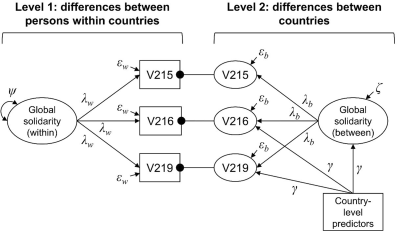
Fig. 1 Two-level structural equation model for explaining noninvariance in global solidarity measures. Large ellipses are the latent variables, rectangles are the observed within-level indicators, and black dots at the within-level are the country-specific indicator intercepts that “re-appear” as the small ellipses at the between-level. λw within-level factor loading, εw within-level residual variance, ψ within-level latent variable variance, λb between-level factor loading, εb between-level residual variance, ζ between-level latent variable residual variance (in a model without country-level predictors, this becomes the between-level latent variable variance), γ regression coefficients of between-level predictors.
Because the number of level-2 units is low (n = 22), and to facilitate substantive interpretation and comparability across model specifications, standardized level‑2 regression coefficients are reported as indicators of effect magnitude (Table 6).
Table 6 MLSEM between-level estimates of separate models explaining item intercept variability across countries (22 countries, n = 36,009)
Model | Country-level predictor | V215: Europeans | V219: Immigrants | Global solidarity factor (between) |
Estimate | SE | Estimate | SE | Estimate | SE |
aGPD scores were divided by 1000 to avoid extremely large variance estimates. * p < 0.10, ** p < 0.05, *** p < 0.01 (two-sided tests) SE standard error |
1 | GDP (divided by 1000)a | −0.121 | 0.153 | 0.151 | 0.093 | 0.559*** | 0.169 |
2 | Internal EU migrants (per capita) | 0.263* | 0.148 | 0.035 | 0.071 | 0.505** | 0.149 |
3 | Asylum seekers (per capita) | 0.047 | 0.032 | 0.022 | 0.016 | 0.076 | 0.055 |
4 | Vote share for Eurosceptic parties | −0.144 | 0.125 | −0.073 | 0.060 | 0.045 | 0.217 |
5 | Feeling of closeness to Europe | 0.395** | 0.114 | 0.101 | 0.082 | 0.108 | 0.272 |
6 | Cultural value embeddedness | 0.176* | 0.100 | −0.173* | 0.100 | −0.228 | 0.162 |
7 | Cultural value egalitarianism | −0.067 | 0.098 | 0.158* | 0.090 | 0.512*** | 0.134 |
8 (final model) | Internal EU migrants (per capita) | 0.400*** | 0.094 | −0.141 | 0.113 | 0.300** | 0.148 |
Feeling of closeness to Europe | 0.394*** | 0.126 | 0.106 | 0.083 | 0.034 | 0.194 |
Cultural value embeddedness | 0.227** | 0.110 | −0.241** | 0.113 | −0.129 | 0.143 |
Cultural value egalitarianism | −0.284*** | 0.108 | 0.194 | 0.125 | 0.382*** | 0.130 |
Our results reveal significant group-specific differences for several contextual variables. Internal EU migration and egalitarianism exhibit moderate to strong effects in explaining between-country differences in the level‑2 factor of global solidarity. Higher levels of intra-EU migration within a country, as well as a stronger prevalence of egalitarian values, are associated with higher levels of global solidarity. With regard to V215, which captures concern for Europeans, the results indicate that four contextual variables explain group-specific differences in the item intercepts. Internal EU migration within the country and feeling close to Europe both have moderate to strong positive effects, while embeddedness has a moderate positive effect. In contrast, egalitarianism shows a moderately negative effect. Together, these contextual factors partially account for the measurement noninvariance in solidarity toward fellow Europeans. Specifically, countries with a higher share of internal EU migration and a stronger average sense of belonging to Europe tend to have higher scores on item V215. In other words, even if the mean levels of global solidarity (the latent variable) were equal across countries, individuals from countries with high internal EU migration and a strong sense of belonging to Europe would express stronger concern for fellow Europeans than those from countries with lower internal EU migration and a weaker sense of belonging. The same interpretation applies to countries with a higher level of embeddedness. Even if mean global solidarity were equal, individuals in countries valuing tradition and social order would express stronger concern for fellow Europeans. In contrast, countries with higher levels of egalitarianism tend to score lower on this item. That is, individuals from more egalitarian countries would express less concern for fellow Europeans compared to those from less egalitarian countries, even if the mean levels of global solidarity were equal. At first glance, this result regarding cultural values may seem counterintuitive. However, egalitarianism emphasizes equality, and individuals in more egalitarian societies may perceive less need to show concern for those they consider social and economic equals. In other words, when fellow Europeans are seen as ‘in the same boat’, there is less perceived need to extend special concern. Similarly, embeddedness implies strong in-group cohesion. Therefore, individuals in countries valuing embeddedness may perceive fellow Europeans as part of a culturally familiar in-Group. In this case, however, being ‘in the same boat’ could increase the expression of concern beyond the mean level of solidarity present in the country.
Regarding V219, which measures respondents’ solidarity concerns towards immigrants, two country-level factors were identified that could explain group-specific differences in the item’s intercept. Both cultural values significantly affect scores on solidarity towards immigrants beyond the latent level‑2 variable. Embeddedness shows a weak to moderate negative effect, while egalitarianism has a weak positive effect (observed only in the separate model). This suggests that, even when mean global solidarity levels are equal across countries, respondents in countries that are more accustomed to interacting with individuals from diverse migration backgrounds and that value principles of equality and fairness tend to express higher concern for immigrants. Conversely, higher levels of embeddedness, reflecting a stronger attachment to the collective, a greater emphasis on maintaining social order and tradition, and stronger in-group solidarity, are associated with lower scores on this item, indicating reduced concern for immigrants.
When it comes to explaining measurement noninvariance, the contextual and cultural differences between countries can be interpreted as creating significant variations in the internal standards affecting how people interpret the items related to expressing concern for Europeans (V215) and immigrants (V219). For example, due to varying culturally driven interpretations of who or what is meant by ‘Europeans’ and how they should be treated (e.g., as ‘equals that stand on their own’ or as ‘people from similar cultural background’), the internal ‘calibration’ of item V215 related to global solidarity differed across countries, statistically leading to noninvariant item intercepts. Moreover, concerning item V219, variations in internal standards for expressing concern for immigrants were influenced by a cultural emphasis on equal treatment of all people, which may foster greater empathy and may lead to an internal calibration that ‘makes it easier’ to express support for immigrants. On the contrary, a cultural predominance of maintaining traditions and customs and striving towards the shared goals of the collective may shift the focus of people’s solidarity away from out-groups to the in-group, ‘making it more difficult’ to express concern for immigrants while at the same time ‘making it easier’ to express concern for fellow Europeans, irrespective of the level of global solidarity or economic and demographic factors.
To conclude this section, the noninvariance of solidarity towards Europeans and immigrants is explained by cultural rather than demographic, economic, or political factors. The complex interplay of cultural, demographic, and economic influences on cross-country perceptions of solidarity towards Europeans and immigrants underscores the need for nuanced approaches that take contextual factors, especially cultural ones, into account when measuring public attitudes towards global solidarity.
8 Conclusions
Providing substantive insights into why individuals from diverse cultural, demographic, economic and political backgrounds respond variably to survey questions is crucial for enhancing the quality of cross-cultural survey research. In this study, we utilised an MLSEM approach to elucidate the noninvariance of measures concerning attitudes towards global solidarity. Specifically, we identified measurement noninvariance in items addressing concerns for the living conditions of Europeans and immigrants. Employing a series of empirical models, each incorporating one of seven country-level variables, we sought to explain this noninvariance. Our findings revealed that cultural values and demographic factors contributed significantly to explaining this phenomenon, whereas economic and political differences between countries did not. We observed that exposure to individuals with migration backgrounds, whether inner EU immigrants or asylum seekers, explained intercept differences across countries, which leads us to believe that the respondents’ interpret the term ‘immigrant’ differently. Additionally, the cultural values of embeddedness and egalitarianism elucidated why measurement equivalence for European and immigration solidarity varied across countries. Both cultural values provide distinct frameworks for interpreting the survey items. Therefore, despite semantic equivalence and meticulous translation, culturally induced measurement noninvariance remains a challenge.
Consequently, the comparability of measures of global solidarity is inherently limited when comparing countries with vastly different demographic and cultural backgrounds. Respondents from diverse contexts not only express divergent attitudes towards global solidarity but also interpret survey items differently due to these inherent country-level differences. To enhance comparability in this field, future research should develop survey questions that minimise conceptual ambiguity. To give an example, clarity in defining terms such as ‘immigrants’ and ‘Europeans’ seems to be essential for ensuring uniform interpretations across diverse cultural contexts. From this perspective, inputs provided by techniques aimed at understanding the different cultural interpretations of such items, such as cognitive interviews and web-probing (Behr et al., 2017; Meitinger, 2017), can complement the results of the current study and help identify sources of ambiguity as well as provide formulations that are conceptually shared in a cross-national setting.
1 Supplementary Information
ESM1: Supplementary material 1 ESM2: Supplementary material 2 References
Abela, A. M. (2004). Solidarity and religion in the European Union: A comparative sociological perspective. In P. Xuereb (Ed.), The Value (s) of a Constitution for Europe (pp. 71–101). European Documentation and Research Centre, University of Malta. a, b, c, d
Ariemma, L., Bailliet, C., & Torres-Salas, N. (2025). International solidarity as a human right. Shared Goal, and Community Action, 119, 30–35. https://doi.org/10.1017/aju.2025.2. →
Asparouhov, T., & Muthén, B. (2014). Multiple-group factor analysis alignment. Structural Equation Modeling: A Multidisciplinary Journal, 21(4), 495–508. https://doi.org/10.1080/10705511.2014.919210. a, b
Bartenstein, A. (2021). The concept of solidarity. Energy policy in the European Union. https://doi.org/10.5771/9783748927952. →
Baute, S., Meuleman, B., Abts, K., & Swyngedouw, M. (2018). Measuring attitudes towards social Europe: a multidimensional approach. Social Indicators Research, 137, 353–378. →
Bazzani, G. (2025). Solidarity reimagined in the face of global challenges: the emergence of altruistic solidarity. European Journal of Social Theory. https://doi.org/10.1177/13684310251360994. a, b, c
Behr, D., Meitinger, K., Braun, M., & Kaczmirek, L. (2017). Web probing—Implementing probing techniques from cognitive interviewing in web surveys with the goal to assess the validity of survey questions (Version 1.0). Vol. 1. GESIS—Leibniz-Institut für Sozialwissenschaften. https://doi.org/10.15465/gesis-sg_en_023. →
Blinder, S. (2015). Imagined immigration: the impact of different meanings of ‘immigrants’ in public opinion and policy debates in Britain. Political Studies, 63(1), 80–100. https://doi.org/10.1111/1467-9248.12053. →
Braun, M. (2009). The role of cultural contexts in item interpretation: the example of gender roles. In R. Haller, T. Jowell & W. Smith (Eds.), The International Social Survey Programme, 1984–2009: charting the globe (pp. 395–408). Routledge. →
Brown, T. A. (2015). Confirmatory factor analysis for applied research (2nd edn.). Guilford. →
Chen, F. F. (2007). Sensitivity of goodness of fit indexes to lack of measurement invariance. Structural Equation Modeling, 14(3), 464–504. https://doi.org/10.1080/10705510701301834. →
Coltman, T., Devinney, T. M., Midgley, D. F., & Venaik, S. (2008). Formative versus reflective measurement models: two applications of formative measurement. Journal of Business Research, 61(12), 1250–1262. https://doi.org/10.1016/j.jbusres.2008.01.013. →
Dany, C. (2021). Solidarity through localization? Humanitarian responses to the COVID-19 pandemic. Frontiers in Political Science. https://doi.org/10.3389/fpos.2021.695654. →
Dutceac Segesten, A., & Bossetta, M. (2019). Can Euroscepticism contribute to a European public sphere? The Europeanization of media discourses on Euroscepticism across six countries. JCMS: Journal of Common Market Studies, 57(5), 1051–1070. https://doi.org/10.1111/jcms.12871 →
Davidov, E., Dülmer, H., Schlüter, E., Schmidt, P., & Meuleman, B. (2012). Using a multilevel structural equation modeling approach to explain cross-cultural measurement noninvariance. Journal of Cross-Cultural Psychology, 43(4), 558–575. https://doi.org/10.1177/0022022112438397. a, b
Davidov, E., Dülmer, H., Cieciuch, J., Kuntz, A., Seddig, D., & Schmidt, P. (2018). Explaining measurement nonequivalence using multilevel structural equation modeling: the case of attitudes toward citizenship rights. Sociological Methods & Research, 47(4), 729–760. https://doi.org/10.1177/0049124116672678. a, b
Dülmer, H., Schwartz, S. H., Cieciuch, J., Davidov, E., & Schmidt, P. (2024). Testing Schwartz’s model of cultural value orientations in europe with the European social survey: an empirical comparison of additive indexes with factor scores. Survey Research Methods, 17(4), 447–463. https://doi.org/10.18148/srm/2023.v17i4.8031. →
Eckenwiler, L., Straehle, C., & Chung, R. (2012). Global solidarity, migration and global health inequity. Bioethics, 26(7), 382–390. https://doi.org/10.1111/j.1467-8519.2012.01991.x. →
Eurostat (2025). Population in private households by citizenship and labour status. https://ec.europa.eu/eurostat/databrowser/view/LFSA_PGANWS__custom_19223090/default/table. Accessed 2 Dec 2025. →
EVS (2020a). European Values Study 2017: Integrated Dataset (EVS 2017). ZA7500 Data File Version 5.0.0. Cologne: GESIS Data Archive. https://doi.org/10.4232/1.13897. a, b, c, d, e
EVS (2020b). European Values Study (EVS) 2017: Methodological Guidelines. GESIS Papers. https://doi.org/10.21241/SSOAR.70110. →
Garbe, S. (2024). Solidarity and global inequalities. In Global handbook of inequality (pp. 317–341). Cham: Springer. https://doi.org/10.1007/978-3-031-32152-8_109. →
Hox, J. J. (2013). Multilevel regression and multilevel structural equation modeling. In T. D. Little (Ed.), The Oxford handbook of quantitative methods: Statistical analysis (pp. 281–294). Oxford University Press. →
Hox, J. J., De Leeuw, E. D., & Zijlmans, E. A. O. (2015). Measurement equivalence in mixed mode surveys. Quantitative Psychology and Measurement, 6, 87. https://doi.org/10.3389/fpsyg.2015.00087. →
Ignácz, Z. S. (2021). Similarities Between European and National Solidarity. An Empirical Thought Experiment About Attitudes Towards Redistribution. Sozialpolitik, 11, 1–3. →
Jak, S. (2019). Cross-level invariance in multilevel factor models. Structural Equation Modeling, 26(4), 607–622. https://doi.org/10.1080/10705511.2018.1534205. →
Kankaraš, M., & Moors, G. (2009). Measurement equivalence in solidarity attitudes in europe insights from a multiple-group latent-class factor approach. International Sociology, 24(4), 557–579. https://doi.org/10.1177/0268580909334502. a, b, c, d
Karreth, J., Singh, S. P., & Stojek, S. M. (2015). Explaining attitudes toward immigration: the role of regional context and individual predispositions. West European Politics, 38(6), 1174–1202. https://doi.org/10.1080/01402382.2015.1022039. →
Katsanidou, A., Reinl, A. K., & Eder, C. (2022). Together we stand? Transnational solidarity in the EU in times of crises. European Union Politics, 23(1), 66–78. https://doi.org/10.1177/146511652110356 →
Kent, J. (2022). Can urban fabric encourage tolerance? Evidence that the structure of cities influences attitudes toward migrants in Europe. Cities, 121, 103494. →
Košťál, J., & Klicperová-Baker, M. (2015). European sociopolitical mentalities: identifying pro- and antidemocratic tendencies. European Societies, 17(3), 333–350. https://doi.org/10.1080/14616696.2015.1018719. →
Langsæther, P. E., & Stubager, R. (2019). Old wine in new bottles? Reassessing the effects of globalisation on political preferences in Western Europe. European Journal of Political Research, 58(4), 1213–1233. https://doi.org/10.1111/1475-6765.12332. →
Leitgöb, H., Seddig, D., Asparouhov, T., Behr, D., Davidov, E., De Roover, K., Jak, S., Meitinger, K., Menold, N., Muthén, B., Rudnev, M., Schmidt, P., & van de Schoot, R. (2023). Measurement invariance in the social sciences: Historical development, methodological challenges, state of the art, and future perspectives. Social Science Research, 110, 1–30. https://doi.org/10.1016/j.ssresearch.2022.102805. a, b
Lomazzi, V. (2021). Can we compare solidarity across Europe? What, why, when, and how to assess exact and approximate equivalence of first-and second-order factor models. Frontiers in Political Science, 3, 641698. a, b, c, d, e, f, g, h, i, j, k, l
Luijkx, R., Jónsdóttir, G. A., Gummer, T., Stähli, E. M., Frederiksen, M., Ketola, K., Reeskens, T., Brislinger, E., Christmann, P., Gunnarsson, S. Þ., Hjaltason, Á. B., Joye, D., Lomazzi, V., Maineri, A. M., Milbert, P., Ochsner, M., Pollien, A., Sapin, M., Solanes, I., & Wolf, C. (2020). The European values study 2017: on the way to the future using mixed-modes. European Sociological Review, 37(2), 330–346. https://doi.org/10.1093/esr/jcaa049. →
Meitinger, K. (2017). Necessary but insufficient. Why measurement Invariance tests need online probing as a complementary tool. Public Opinion Quarterly, 81(2), 447–472. https://doi.org/10.1093/poq/nfx009. →
Meitinger, K., Davidov, E., Schmidt, P., & Braun, M. (2020). Measurement invariance: testing for it and explaining why it is absent. Survey Research Methods, 14(4), 345–349. →
Muthén, L. K., & Muthén, B. O. (2017). Mplus user’s guide (8th edn.). Los Angeles: Muthén & Muthén. →
van Oorschot, W., Arts, W., & Halman, L. (2005). Welfare state effects on social capital and informal solidarity in the European Union: evidence from the 1999/2000 European Values Study. Policy & Politics, 33(1), 33–54. https://doi.org/10.1332/0305573052708474. →
Persson, M., & Solevid, M. (2014). Measuring political participation—testing social desirability bias in a web-survey experiment. International Journal of Public Opinion Research, 26(1), 98–112. https://doi.org/10.1093/ijpor/edt002. →
Quandt, M., & Lomazzi, V. (2023). Solidarity: a European value? In R. Polak & P. Rohs (Eds.), Values—politics—religion: the European values study: in-depth analysis—interdisciplinary perspectives—future prospects (pp. 249–280). Springer. https://doi.org/10.1007/978-3-031-31364-6_7. a, b
Reinl, A. K. (2022). Transnational solidarity within the EU: public support for risk-sharing and redistribution. Social Indicators Research, 163(3), 1373–1397. a, b
Reinl, A. K., Seddig, D., Dennison, J., & Davidov, E. (2024). Basic human values and preferences for an EU-wide social benefit scheme. JCMS: Journal of Common Market Studies, 62(2), 564–582. →
Rusu, H. (2012). Measuring social solidarity. Some research notes. Social Change Review, 10(1), 71–90. https://doi.org/10.2478/scr-2013-0012. a, b
Sangiovanni, A. (2013). Solidarity in the European union. Oxford Journal of Legal Studies, 33(2), 213–241. →
Schulpen, L., & Huyse, H. (2017). Editorial: citizen initiatives for global solidarity. The new face of European solidarity. Forum for Development Studies, 44(2), 163–169. https://doi.org/10.1080/08039410.2017.1306956. →
Schwartz, S. H. (1994). Are there universal aspects in the structure and contents of human values? Journal of Social Issues, 50(4), 19–45. https://doi.org/10.1111/j.1540-4560.1994.tb01196.x. →
Schwartz, S. H. (2006). A theory of cultural value orientations: explication and applications. Comparative Sociology, 5(2), 137–182. https://doi.org/10.1163/156913306778667357. a, b
Seddig, D., & Lomazzi, V. (2019). Using cultural and structural indicators to explain measurement noninvariance in gender role attitudes with multilevel structural equation modeling. Social Science Research, 84, 102328. https://doi.org/10.1016/j.ssresearch.2019.102328. a, b, c
Stockemer, D., Niemann, A., Unger, D., & Speyer, J. (2020). The “refugee crisis,” immigration attitudes, and euroscepticism. International Migration Review, 54(3), 883–912. →
Thijssen, P., & Verheyen, P. (2022). It’s all about solidarity stupid! How solidarity frames structure the party political sphere. British Journal of Political Science, 52(1), 128–145. a, b
Wallaschek, S. (2020). Contested solidarity in the Euro crisis and Europe’s migration crisis: A discourse network analysis. Journal of European Public Policy, 27(7), 1034–1053. https://doi.org/10.1080/13501763.2019.1659844
West, S. G., Taylor, A. B., & Wu, W. (2012). Model fit and model selection in structural equation modeling. In R. H. Hoyle (Ed.), Handbook of structural equation modeling (pp. 209–231). New York: Guilford. →
Wilde, L. (2007). The Concept of Solidarity: Emerging from the Theoretical Shadows? The British Journal of Politics and International Relations, 9(1), 171–181. https://doi.org/10.1111/j.1467-856x.2007.00275.x. →